
"Would you have known?" Train harder = perform better!
When it’s getting dark outside or we’re moving around in dimly lit indoor spaces, the body often slows down without us realising it. A sports science study conducted by the University of Basel and the Technical University of Munich has shown that brightness not only influences our sense of alertness but also directly boosts physical performance.
 The Trial on the Exercise Bike
To test the direct influence of light on sporting performance, 43 healthy men took part in an exercise experiment on a bicycle ergometer. Each participant underwent two different conditions: either they spent 160 minutes under bright light at around 4,420 lux or under subdued, dimmed light of approximately 230 lux, which corresponds to typical indoor lighting. During the first two hours, the participants rested under the respective lighting conditions before undertaking the actual exercise test during the final 40 minutes. The task was to generate as much total mechanical work in kilojoules as possible on the pedals over the entire duration of the test.
The measurements provided a clear picture: under bright light, the participants performed significantly more total work over the 40 minutes than under dim light. The median amount of work performed rose from 521.5 kilojoules in dim light to 548.4 kilojoules under the 4,420-lux condition. The bright light acted as a physiological stimulant, enabling the athletes to consciously draw on deeper reserves of performance.
Increased physical exertion and a changed perception of exertion
This increased effort went hand in hand with measurably higher physiological stress levels. In bright light, blood lactate levels were on average 12.7 per cent higher, and heart rate rose by 1.8 per cent compared with cycling in dim light. On the Borg scale, too, the participants rated their perceived exertion 2.6 per cent higher. The bright light was subjectively perceived as energising and enabled the participants to push themselves closer to their actual performance limits, both in terms of muscular and cardiovascular capacity.
Particularly revealing was the finding that the extent of the performance gain is closely linked to the body’s internal biological clock. The researchers determined the individual mid-sleep point of the participants on their days off. Athletes whose exercise test took place around 14.8 hours after this mid-sleep point – which typically corresponded to early chronotypes during evening test sessions – benefited significantly: Under bright light, they generated an average of 27.6 kilojoules more work on the pedals than under dimmed light. If, on the other hand, the test window was only around 11.8 hours after the mid-sleep point, the additional performance gain was significantly lower, at just 2.6 kilojoules.
Tips & tricks for your everyday life
Practical strategies for everyday work and training can be derived from these physiological mechanisms:
Use natural daylight to boost your training: Don’t schedule strenuous tempo or interval runs for the dark evening hours or in windowless basement rooms. Make the most of the brightest hours of the day, as the eye transmits brightness as a signal of arousal to the central nervous system.
Turn up the artificial lighting deliberately: If you’re training indoors, don’t dim the lights. A bright environment (or training right by a window) signals activity to the body and makes it easier to push yourself to the limit.
Take your chronotype into account: Those who get up early and train in the late afternoon benefit particularly from bright light to counteract the natural dip in performance and unleash fresh energy.
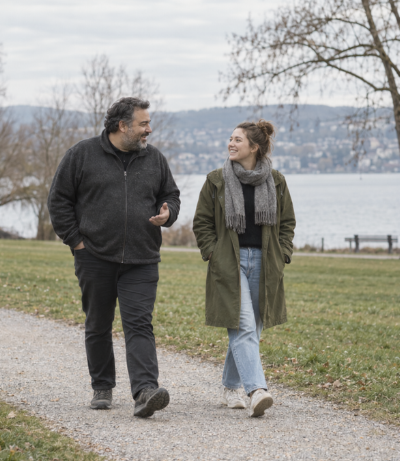
sportify Activity-Tipps: Here's How to Combine Light and Movement
To make sure you easily get your daily dose of luxury and steps as part of your everyday work and training routine, it’s best to use our Spotify formats:
Walking meetings instead of meeting rooms: Grab your colleagues and move your next one-to-one meeting outdoors.
ASTAB Running (internal to the DDPS): Join the group runs and walks at lunchtime or after work.
An active lunch break in the fresh air: Swap your canteen coffee for a brisk 15-minute walk