
Exercises (2337)
Tyre relay
Forms of play / exercises
Group work
4-6 participants per group
The first participant in the group runs (alone) to the turnaround, slips through a tyre there and runs back to the group. Now the first participant runs with the second participant (holding hands) to the turning point, where they have to slip through the tyre again. The hands must not be released. This scenario is repeated until the entire group has slipped through the hoop (together with constant hand grasping). After this round, the first participant (who has travelled the longest so far) is allowed to disengage and the remaining group members continue the exercise. Finally, only the participant who was the last to join the group runs. At the end, all participants in the group have completed the same number of runs. Which group was the first to complete the task?
Per group:
2 colouring sticks
1 tyre
Tyre pulling
Fighting and roughhousing games
Partner work
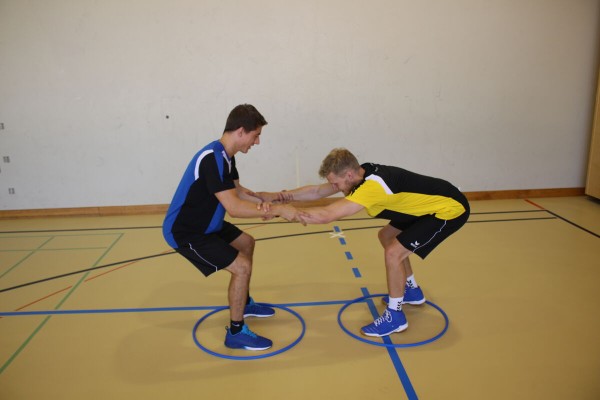
Two participants stand opposite each other in a hoop and grab each other by the hands or forearms. They try to push or pull their opponent out of the hoop. The first person to touch the ground outside the tyre loses.
2 tyres
Reserve
Miscellaneous
The sports manager plans a reserve in the main part so that there is certainly no lack of time (e.g. additional breaks are necessary, postponement time could take longer, post changes are less speedy, etc.).
Rescue and transport
Power
Partner work
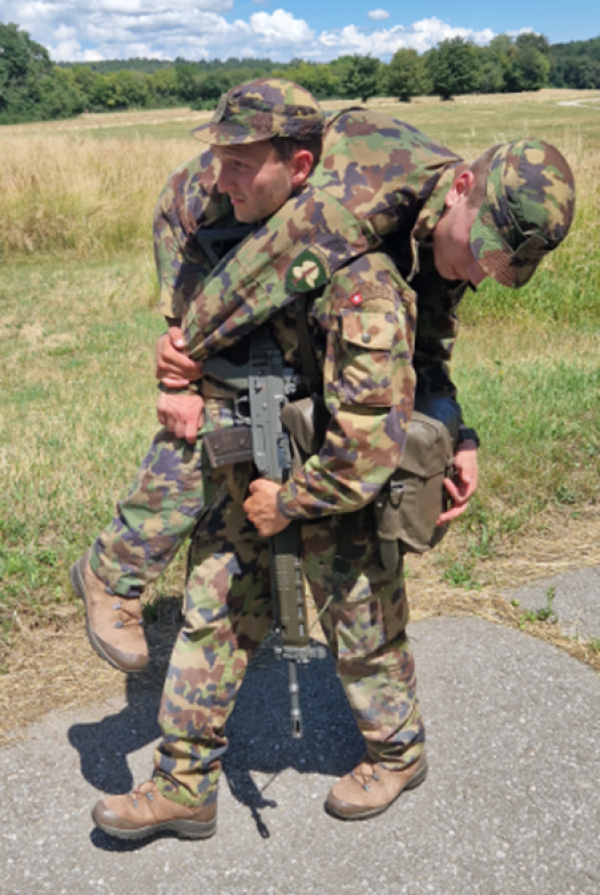
Transport your comrade from one fanjon to another (Gamstrage grip) using the transport techniques from the regulations for self-help and comrade assistance (59.005).
Attention:
The back must be straight when lifting the comrade.
Material per participant: Tenue CNG 428
Additional material: 2 fanjons
Risk run
Forms of play / exercises
Group work
4-5 participants per group
The front runners compete against each other (the group can determine the order of the runners accordingly) and collect points for their group. The runners choose between reversal points at different distances (e.g. colouring stick, marker cone or cones). More risk (further distance) is rewarded with more points (3 points, 2 points, 1 point), but only the first to arrive receives the points scored, the rest go home empty-handed only the first two (or more, depending on the number of groups, e.g. the first two teams) receive points. Which group has the most points after a run (each group member completes one run), or which group is the first to score a number of points? Each run only starts at the signal of the game leader.
Possible forms of locomotion:
- four-footed forwards/backwards
- in a push-up position with a partner holding the legs up
- gamstrage grip
Per group:
4 colouring sticks
Roll backwards
Floor and apparatus gymnastics


From a standing position, roll backwards and place your feet on the floor behind your hands as quickly and as close as possible to return to a standing position. Curl your upper body like a turtle shell during the entire rolling movement from the top of your head to your tailbone. Roll over the upper back and shoulders and not over the head.
The participants practise the form of movement independently using series of pictures or based on the instructor's demonstration of the exercise. The instructor (or a partner) gives feedback, provides support and checks that the exercise is being performed correctly.
4 soft mats (small) ► indoor version
1 row
outdoor:
turf field
Roll backwards through the handstand (Streuli)
Floor and apparatus gymnastics


Roll backwards from an upright position, placing your feet on the floor as quickly and as close as possible behind your hands. Curl your upper body like a turtle shell during the entire rolling movement from the top of your head to your tailbone. Roll over the upper back and shoulders and not over the head. At the end of the roll, push your body into a handstand (full body stretch). The arms can be bent at first and then stretched or remain stretched throughout the movement. From the handstand, place the legs on the floor to return to the standing position.
In order to be able to perform this sequence of movements, it is necessary to be able to roll forwards and backwards, have appropriate support in the arms and master the tilt kick movement.
The participants practise the form of movement independently using series pictures or based on the demonstration of the exercise by the sports leader. The sports instructor (or a partner) gives feedback, provides support and checks that the exercise is being performed correctly.
4 soft mats (small) ► indoor version
1 row
outdoor:
turf field
Roll forwards and backwards
Floor and apparatus gymnastics


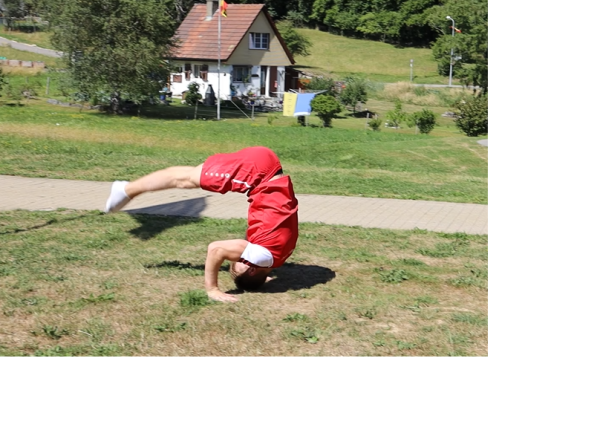


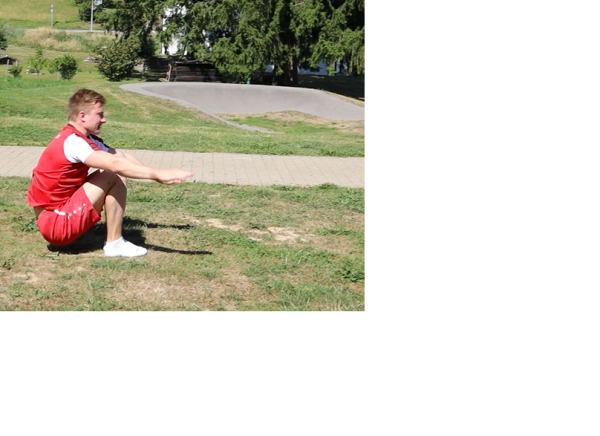


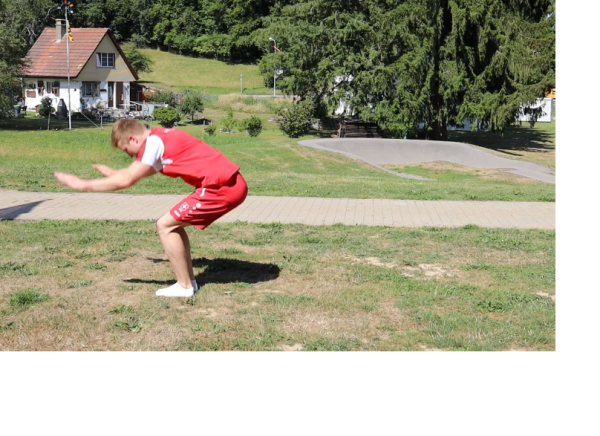


The two rolls are performed one after the other:
Roll fw:
From an upright standing position, perform a forward roll and land back on your feet without using your hands to stand up.
Roll rw:
From a standing position, roll backwards and place your feet on the floor as quickly and as close as possible behind your hands to return to a standing position. Curve the upper body from the top of the head to the tailbone like a tortoise shell during the entire rolling movement. Roll over the upper back and shoulders and not over the head.
The participants practise the form of movement independently using series of pictures or based on the instructor's demonstration of the exercise. The instructor (or a partner) gives feedback, provides support and checks that the exercise is being performed correctly.
4 soft mats (small) ► indoor version
1 row
outdoor:
turf field
Roll forwards
Floor and apparatus gymnastics


From an upright standing position, perform a forward roll and land back on your feet without using your hands when standing up.
The participants practise the movement independently using series of images or based on the instructor's demonstration of the exercise. The instructor (or a partner) gives feedback, provides support and checks that the exercise is being performed correctly.
4 soft mats (small) ► indoor version
1 row
outdoor:
turf field
Roll with raised arms and legs in lateral position left/right
Power
Individual work


Lay on your side, stretch your legs and arms and lift them slightly off the floor. Pull your navel towards your spine and consciously tense your abdomen and then change your side position without changing your body position (roll alternately to the right or left side).
Attention:
Stretched arms and legs practically form a line.
Lighten:
Just hold the position with your arms and legs raised and switch sides from time to time.
Harden:
Add weight to your arms and/or legs.
2-4 weight cuffs/2 weight balls/dumbbells ► Make the exercise more difficult (additional weight)
Rotation of the upper body in frontal stance to the wall (left) ► standing upper body rotation
Power
Individual work
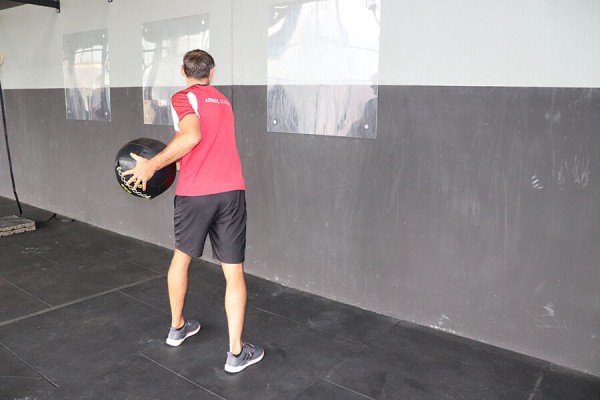
Stand upright in front of a wall, shoulder-width apart (facing the wall), with arms bent (approximately 90 degrees at the elbow joint), holding a medicine ball in front of the body with both hands slightly below chest height. The upper body is turned/rotated as far as possible to the left side (gaze follows the movement), while the legs and arms remain stable (lift the heel on the opposite side - right - as far as possible). Then swing the upper body back to the starting position and at the same time throw the ball (sideways) against the wall. Catch the ball and return to the starting position to restart the exercise.
Attention:
Tighten your stomach, keep your back straight, your pelvis remains in place and only your upper body moves.
Lighten:
Smaller movements (less rotation); lighter ball.
Harden:
Additional weight (on the arms); heavier ball; unstable base.
1 wall
1 medicine ball
1 volleyball or football ► make the exercise easier
2 weight cuffs ► make the exercise more difficult (additional weight)
1-2 balance cushions/1 balance board ► make the exercise more difficult (unstable surface)
Rotation of the upper body in frontal stance to the wall (right) ► standing upper body rotation
Power
Individual work

Stand upright in front of a wall, shoulder-width apart (facing the wall), with arms bent (approximately 90 degrees at the elbow joint), holding a medicine ball in front of the body with both hands slightly below chest height. The upper body is turned/rotated as far as possible to the right side (gaze follows the movement), while the legs and arms remain stable (lift the heel on the opposite side - left - as far as possible). Then swing the upper body back to the starting position and at the same time throw the ball (sideways) against the wall. Catch the ball and return to the starting position to restart the exercise.
Attention:
Tighten your stomach, keep your back straight, your pelvis remains in place and only your upper body moves.
Lighten:
Smaller movements (less rotation); lighter ball.
Harden:
Additional weight (on the arms); heavier ball; unstable base.
1 wall
1 medicine ball
1 volleyball or football ► make the exercise easier
2 weight cuffs ► make the exercise more difficult (additional weight)
1-2 balance cushions/1 balance board ► make the exercise more difficult (unstable surface)
Rotation of the upper body in frontal stance alternating to the wall ► standing upper body rotation
Power
Individual work


Stand upright, shoulder-width apart, in front of a wall (facing the wall), with arms bent (approximately 90 degrees at the elbow joint), holding a medicine ball in front of the body with both hands slightly below chest height. The upper body is turned/rotated as far as possible to the side (gaze accompanies the movement), while the legs and arms remain stable (lift the heel on the opposite side of the rotation movement at most). Then swing the upper body back to the starting position and at the same time throw the ball (sideways) against the wall. Catch the ball and return to the starting position to start the same exercise on the other side.
Attention:
Tighten your abdomen, keep your back straight, your pelvis stays in place and only your upper body moves.
Lighten:
Smaller movements (less rotation); lighter ball.
Harden:
Additional weight (on the arms); heavier ball; unstable base.
1 wall
1 medicine ball
1 volleyball or football ► make the exercise easier
2 weight cuffs ► make the exercise more difficult (additional weight)
1-2 balance cushions/1 balance board ► make the exercise more difficult (unstable surface)
Rotation of the upper body while standing sideways to the wall (left) ► standing upper body rotation
Power
Individual work


Stand upright in front of a wall (facing the wall horizontally, left shoulder closer to the wall), with arms bent (approximately 90 degrees at the elbow joint), hold a medicine ball in front of the body with both hands slightly below chest height. The upper body is turned/rotated to the side towards the wall in a swinging motion (gaze accompanies the movement) until the arms are facing the wall and the ball is thrown against the wall at the same time. During the rotation movement, the legs and arms remain stable (lift the heel of the foot furthest from the wall at most). Catch the ball and bring your upper body back to the starting position.
Attention:
Tighten your stomach, keep your back straight, your pelvis remains in place and only your upper body moves.
Lighten:
Smaller range of motion by pointing the stance more towards the wall (less rotation); lighter ball.
Harden:
Additional weight (on the arms); heavier ball; unstable base.
1 wall
1 medicine ball
1 volleyball or football ► make the exercise easier
2 weight cuffs ► make the exercise more difficult (additional weight)
1-2 balance cushions/1 balance board ► make the exercise more difficult (unstable surface)
Rotation of the upper body while standing sideways to the wall (right) ► standing upper body rotation
Power
Individual work


Stand upright in front of a wall (facing the wall horizontally, right shoulder closer to the wall), with arms bent (approximately 90 degrees at the elbow joint), hold a medicine ball in front of the body with both hands slightly below chest height. The upper body is turned/rotated to the side towards the wall in a swinging motion (gaze accompanies the movement) until the arms are facing the wall and the ball is thrown against the wall at the same time. During the rotation movement, the legs and arms remain stable (lift the heel of the foot furthest from the wall at most). Catch the ball and bring your upper body back to the starting position.
Attention:
Tighten your stomach, keep your back straight, your pelvis remains in place and only your upper body moves.
Lighten:
Smaller range of motion by pointing the stance more towards the wall (less rotation); lighter ball.
Harden:
Additional weight (on the arms); heavier ball; unstable base.
1 wall
1 medicine ball
1 volleyball or football ► make the exercise easier
2 weight cuffs ► make the exercise more difficult (additional weight)
1-2 balance cushions/1 balance board ► make the exercise more difficult (unstable surface)
Rotation of the upper body in lateral forearm support (left) ► rotational lateral pillar bridge / side bridge
Power
Individual work


Side support on the (left) forearm and vertically extended upper arm, looking upwards, bring the upper arm under the body and back to the starting position, accompany the movement with your head (looking down from above).
Attention:
Pelvis remains stable.
Lighten:
Knees on the floor.
Harden:
Additional weight (for the free arm); unstable base (possible for both the supporting arm and the legs).
1 weight cuff/dumbbell ► making the exercise more difficult (additional weight)
1 ball/1-2 balance cushions/1 balance board ► making the exercise more difficult (unstable surface)
Rotation of the upper body in lateral forearm support (left) ► rotational lateral pillar bridge / side bridge
Power
Individual work
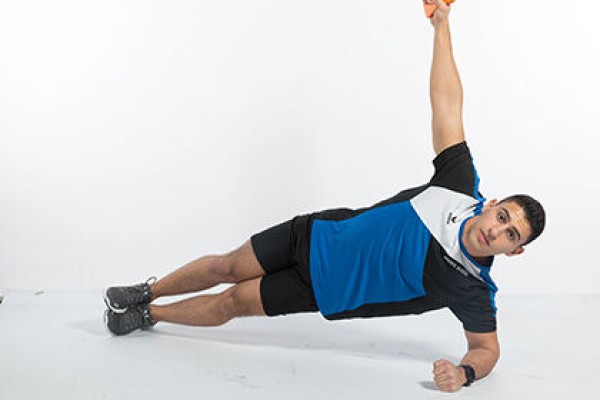

Side support on the (left) forearm and vertically extended upper arm, hold the pistol in the free hand, look towards the weapon, bring the pistol under the body and back to the starting position, accompany the movement with the head (look from top to bottom).
Attention:
Pelvis remains stable.
Lighten:
Knees on the floor.
Harden:
Instable support (possible for both the supporting arm and the legs).
1 pistol (neutralised)
1 ball/1-2 balance cushions/1 balance board ► Make the exercise more difficult (unstable surface)
Rotation of the upper body in lateral forearm support (left) ► rotational lateral pillar bridge / side bridge
Power
Individual work


Side support on the (left) forearm and vertically extended upper arm, hold the dumbbell in your free hand, look towards the weight, bring the dumbbell under your body and back to the starting position, accompany the movement with your head (look down from above).
Attention:
Keep your pelvis stable; keep the shoulder of the supporting arm above your elbow.
Lighten:
Knees on the floor.
Harden:
Stable support (possible for both the supporting arm and the legs).
1 dumbbell
1 ball/1-2 balance cushions/1 balance board ► Make the exercise more difficult (unstable surface)
Rotation of the upper body in lateral forearm support (left) ► rotational lateral pillar bridge / side bridge
Power
Individual work


Side support on the (left) forearm and vertically extended upper arm, feet on the balance board, look towards the free arm, bring the playing arm under the body and back to the starting position, accompany the movement with your head (look from top to bottom).
Attention:
The pelvis remains stable; keep the shoulder of the supporting arm above the elbow.
Lighten:
Without an unstable base.
Harden:
Instant base for the supporting arm as well; hold additional weight in the free hand.
1 balance board
1 ball/1-2 balance cushions/1 balance board ► Make the exercise more difficult (unstable surface)
1 dumbbell ► Make the exercise more difficult (additional weight)
Rotation of the upper body in lateral forearm support (right)
Power
Individual work
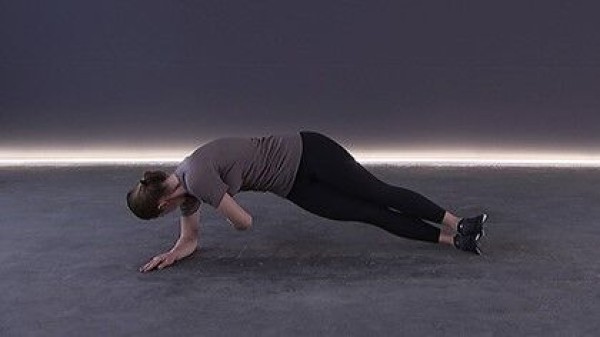

Side support on the (right) forearm and vertically extended upper arm, looking upwards, bring the upper arm under the body and back to the starting position, accompany the movement with your head (looking down from above).
Attention:
Pelvis remains stable.
Lighten:
Knees on the floor.
Harden:
Additional weight (for the free arm); unstable base (possible for both the supporting arm and the legs).
1 weight cuff/dumbbell ► making the exercise more difficult (additional weight)
1 ball/1-2 balance cushions/1 balance board ► making the exercise more difficult (unstable surface)
Rotation of the upper body in lateral forearm support (right) ► rotational lateral pillar bridge / side bridge
Power
Individual work


Side support on the (right) forearm and vertically extended upper arm, hold the pistol in the free hand, look towards the weapon, bring the pistol under the body and back to the starting position, accompany the movement with the head (look from top to bottom).
Attention:
Pelvis remains stable.
Lighten:
Knees on the floor.
Harden:
Instable support (possible for both the supporting arm and the legs).
1 pistol (neutralised)
1 ball/1-2 balance cushions/1 balance board ► Make the exercise more difficult (unstable surface)
Rotation of the upper body in lateral forearm support (right) ► rotational lateral pillar bridge / side bridge
Power
Individual work


Side support on the (right) forearm and vertically extended upper arm, hold the dumbbell in your free hand, look towards the weight, bring the dumbbell under your body and back to the starting position, accompany the movement with your head (look down from above).
Attention:
Pelvis remains stable; rotation of the upper body in lateral forearm support.
Lighten:
Knees on the floor.
Harden:
Instable support (possible for both the supporting arm and the legs).
1 dumbbell
1 ball/1-2 balance cushions/1 balance board ► Make the exercise more difficult (unstable surface)
Rotation of the upper body in lateral forearm support (right) ► rotational lateral pillar bridge / side bridge
Power
Individual work


Side support on the (right) forearm and vertically extended upper arm, feet on the balance board, look towards the free arm, bring the playing arm under the body and back to the starting position, accompany the movement with your head (look from top to bottom).
Attention:
Pelvis remains stable; keep the shoulder of the supporting arm above the elbow.
Lighten:
Without an unstable base.
Heavier:
Instable base also for the supporting arm; hold additional weight in the free hand.
1 balance board
1 ball/1-2 balance cushions/1 balance board ►Make the exercise more difficult (unstable surface)
1 dumbbell ►Make the exercise more difficult (additional weight)
Rotation of the upper body in lateral forearm support with dumbbells (left) ► rotational lateral pillar bridge / side bridge
Power
Individual work
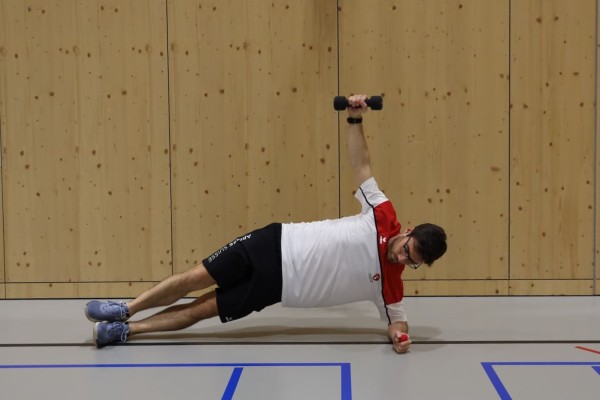
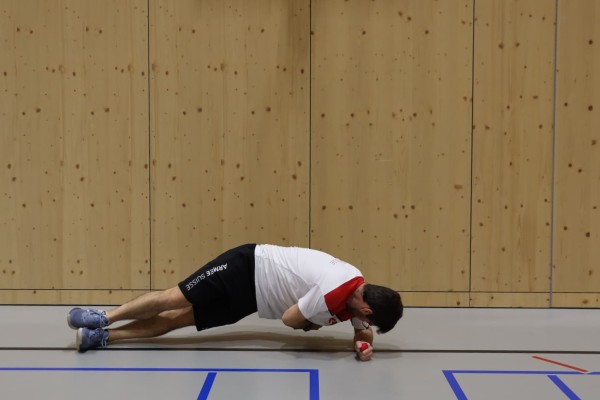
Side support on the (left) forearm and vertically extended upper arm, hold the dumbbell in your free hand, bring the dumbbell under your body and back to the starting position.
Attention:
Keep your pelvis stable; keep the shoulder of the supporting arm above your elbow.
Lighten:
Perform without dumbbells; do the exercise on your knees.
Harden:
More weight.
1 dumbbell
Rotation of the upper body in lateral forearm support with dumbbells (right) ► rotational lateral pillar bridge / side bridge
Power
Individual work
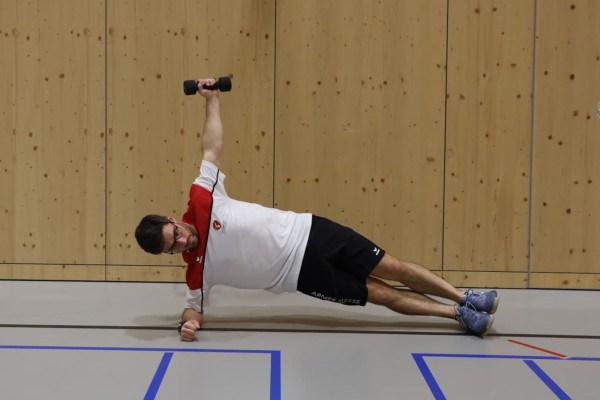
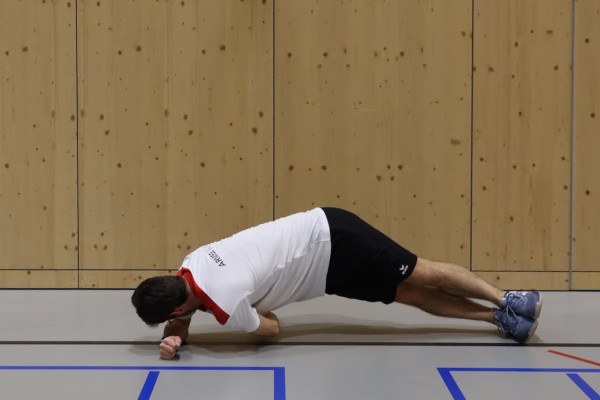
Side support on the (right) forearm and vertically extended upper arm, hold the dumbbell in your free hand, bring the dumbbell under your body and back to the starting position.
Attention:
Keep your pelvis stable; keep the shoulder of the supporting arm above your elbow.
Lighten:
Perform without dumbbells; do the exercise on your knees.
Harden:
More weight.
1 dumbbell