
"Would you have known?" Why wanting to isn’t enough: The secret to successful movement in everyday working life
Who hasn’t been there? On Monday morning, we firmly resolve: “This week I’m going to get more exercise. During my lunch break, I’ll go for a walk outside, and in the afternoon I’ll take a short break to stretch.” But by Friday afternoon, we realize with a pang of regret that our schedule was packed, our minds were full of other things, and our sneakers are still sitting untouched in the corner.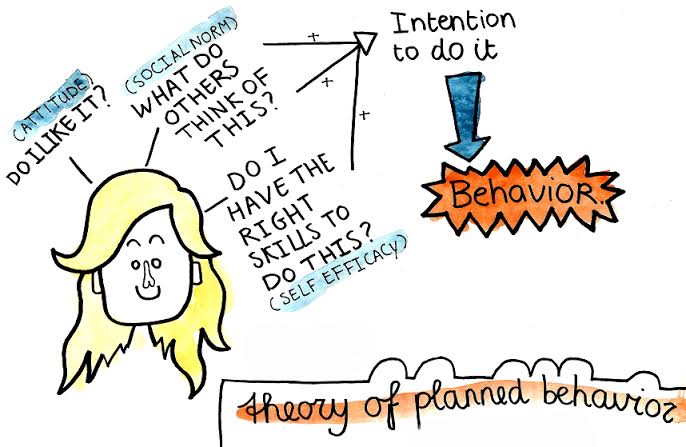 What does Ajzen’s model state?
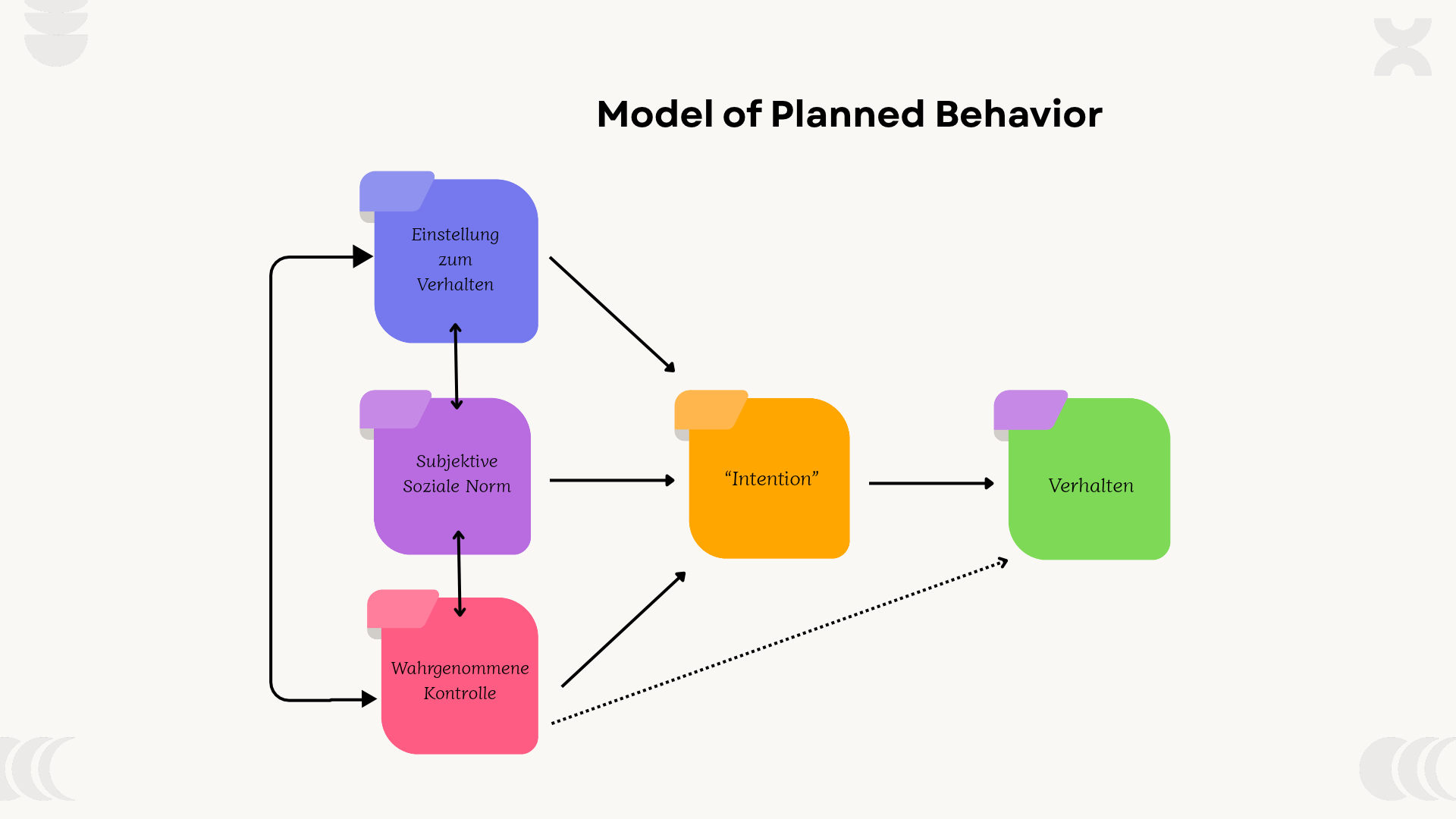
Ajzen studied how thoughts actually translate into actions. His main conclusion: a firm intention (Intention) is indeed the starting point, but it does not automatically lead to the goal. For a good intention to translate into concrete behavior, three psychological factors come into play.
Attitude toward the behavior: How do we personally evaluate the activity? Does it provide a tangible benefit (e.g., less stress, a clearer mind) and is it enjoyable? The more positive our attitude, the stronger the intention.
Social Norm: What do the people around us do, and what do they expect? If physical activity within the group is perceived as normal, desirable, and positive, the willingness to participate increases significantly. If, on the other hand, there is a fear of being looked down upon, motivation declines.
Perceived Behavioral Control: This is the heart of the model and the key to everyday work life. It addresses the question: “How easy or difficult do I think it is to put this into practice under real-world conditions?” These are concrete resources and obstacles: Do I have time? Is the equipment available? Do I know what to do? Do I need to change clothes? The crucial point: if this perceived obstacle is too high, implementation will fail even with the best of intentions. Perceived behavioral control not only determines the strength of our intention but also directly influences whether or not we get started and whether we persevere in the face of resistance.
 Why is it often so hard to get some exercise at the office?
Attitude: We all know, deep down, that exercise is good for our backs and our concentration. The problem: Under work-related stress, our sense of control suddenly plummets to zero. We think: “I don’t have 60 minutes to spare,” “I don’t have my workout clothes with me,” “I don’t want to go to the meeting all sweaty”. The perceived obstacles are enormous—and our good intentions go up in smoke.
The solution: Break down the obstacles instead of relying on discipline
The most important lesson from Ajzen’s model is: don’t try to forcefully double your willpower—instead, cut the obstacles in half! This is exactly where our in-house physical activity initiatives come into play. They’re designed to maximize your behavioral control and make the decision as easy as possible:
1. Maximum control with minimal effort: The solution: Booster (Internal link to VBS) and Active-Office-Box (Internal link to VBS)! Short bursts of movement throughout the day energize your body and mind in just a few minutes, boost work performance by up to 10%, reduce stress, and prevent muscle tension. They work anywhere, without breaking a sweat and without equipment or with the Theraband resistance bands and myofascial massage balls included in the kit, right on your desk. Minimal effort, maximum effect.
2. Clear structure and time slots: the workout offerings: The psychological barrier: “My day is so packed that I don’t know when to fit in physical activity.” The solution: The Kurse & Trainings (Internal link to VBS) take all the planning off your hands. The time and location are set, and the exercises are guided. All you have to do is show up. This saves you mental energy and gives you the confidence that, after the session, you’ll return to work with renewed focus and energy.
3. The Team Effect: Our Running Programs: The Psychological Hurdle: “Today, I just don’t have the motivation to get moving on my own.” The Solution: This is where the subjective norm comes into play. When coworkers lace up their running shoes together, a positive bond is formed. Exercise becomes a shared experience that brings people together, motivates them, and silences that inner laziness all on its own. You can find more information on this here: Gemeinsam in Bewegung: Die ASTAB-Laufgruppe verbindet Gesundheit, Teamgeist und Arbeitsalltag (Internal link to VBS)
Your inspiration for this week
Don’t wait for more time or infinite willpower to suddenly appear as if by magic. Take a look at your day and ask yourself:
“What small obstacle can I overcome today to make physical activity as easy as possible?”
Maybe all it takes is grabbing something from the Active Office Box after your next long phone call, scheduling a quick walk with a coworker, or adding your lunchtime workout as a recurring event in your calendar.