
Exercises (1641)
Raising and lowering the arms while standing ► front raise
Power
Individual work


Stand upright, hold an object (e.g. tyre or rucksack) in front of your body at chest height with your arms almost outstretched, lower and raise your arms (front lift).
Attention:
Tense your stomach, straight back, slightly bent knees.
Lighten:
Less weight/load; raise your arms less.
Harden:
More weight/greater load.
1 tyre (PUCH)/fighting rucksack/weight disc
1-2 PET bottles/1 helmet ► Make the exercise easier
1 sandbag ► Make the exercise more difficult (additional weight)
Raising and lowering the arms while standing ► front raise
Power
Individual work


Stand upright, arms extended downwards in front of the body with the dumbbells (or kettlebells) in your hands (hanging), the backs of your hands pointing forwards (overhand grip), raise your arms in the direction you are facing until they are horizontal (shoulder height, backs of hands pointing upwards) and lower them back to the starting position (front lift).
Attention:
Keep your back straight (possibly back against a wall), actively tense your core.
Lighten:
Less weight.
Harden:
More weight.
2 dumbbells/kettlebells
Raising and lowering the arms while standing ► swing
Power
Individual work


Stand upright, feet hip-width apart, knees slightly bent. With your back straight and your knees still slightly bent, grasp the weight in front of you. As you pick up the weight, swing it backwards through your spread legs until your forearms lightly touch your hips and then push your forearms forwards with your hips. It is important that the weight moves upwards with the swing of the pelvis (perform the movement slightly at the beginning/swing the ball forwards just a little, and as soon as you have memorised the movement, swing the weight a little further upwards).
Attention:
A hunched back is a bad posture. The weight moves upwards through the hip movement and not by raising the arms (loose shoulders, curl the shoulder girdle). The knees do not move forwards and the feet remain on the floor for the necessary stability (no standing on tiptoe).
Lighten:
Less weight.
Heavy:
Move the weight up to the height of the face. More weight.
Variant:
Hold the weight with one hand (train both sides = organisation requires twice the time).
1 sandbag/fighting backpack/kettlebell
Alternating raising and lowering of the arms while standing
Power
Individual work

Stand upright, hold the assault rifle at shoulder height with arms almost outstretched (one hand on the butt, the other on the hand guard), move your arms up and down alternately as you would steer a car (tilt the assault rifle to both sides).
Attention:
Tighten your stomach, straighten your back, stabilise your shoulders (push towards your hips).
Lighten:
Lift your arms less (lower shoulder height).
1 assault rifle (neutralised)
Alternating raising and lowering of the arms while standing
Power
Individual work
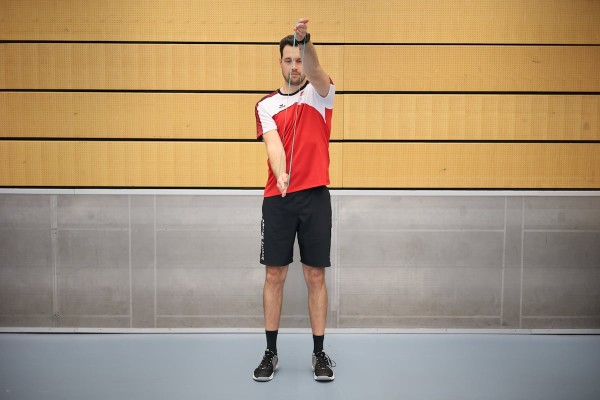
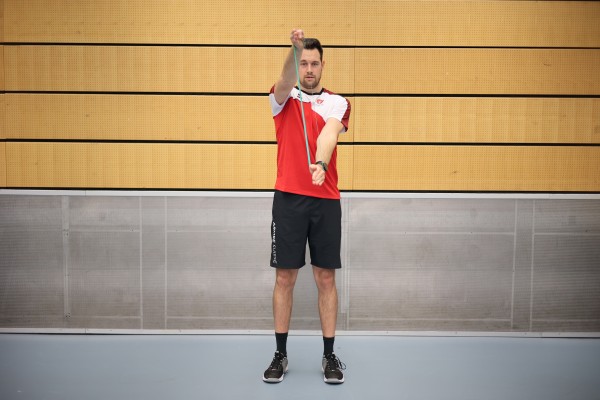
Stand upright with your feet shoulder-width apart, arms stretched out in front of you, move your arms up and down (elevation and depression) (up to the height of your crown or belly button) while holding an elasticated rubber band in your hands (the band is taut at the end positions of your arms).
Lighten:
Select an elastic band with less resistance.
Harden:
Select an elastic band with greater resistance.
1 mini-band
Raising and lowering the arms alternately while standing ► battle rope
Power
Individual work
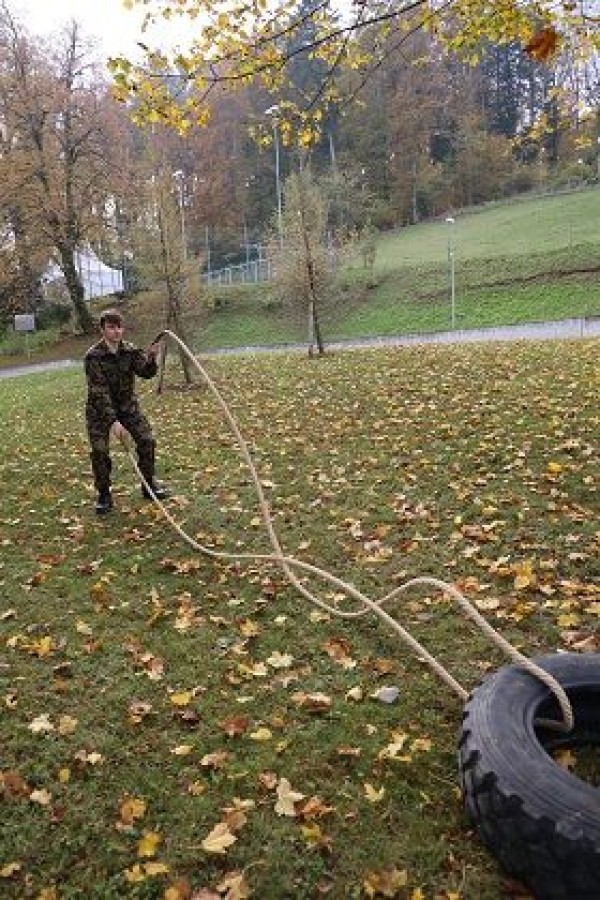
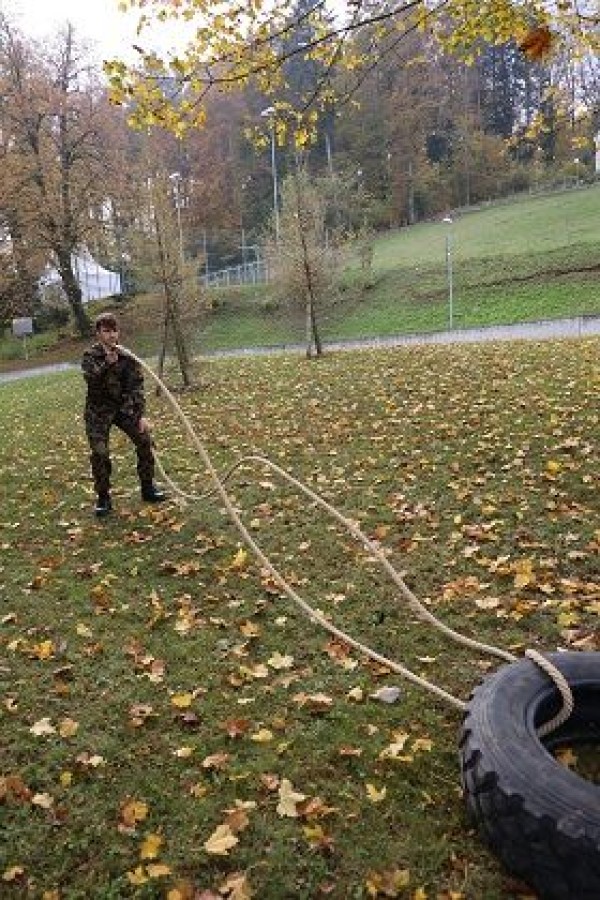
Stand shoulder-width apart, knees slightly bent, grasp one end of the rope with each hand (rope end pointing towards your body), move your arms up and down alternately.
Attention:
The more beautifully the rope swings, the better/cleaner the exercise is performed.
Tighten your stomach; fix your shoulders (press towards your hips).
Lighten:
Lower cadence/lower range of motion.
Harden:
Higher cadence/larger range of motion; perform the exercise standing on one leg or in a lunge (front leg at a right angle, knee not overhanging the tip of the foot, knee of the back leg almost on the floor). When performing the exercises in the one-legged stance or lunge, also change the standing leg.
Variant:
Integrate lunges on the left and right side, perform the exercise in a squat, squatting and kneeling position.
1 rope/rope
1 (lantern) pole/tree or tyre
Raising and lowering the arms alternately while standing ► front raise
Power
Individual work


Stand shoulder-width apart and hold the dumbbells (or kettlebells) with an overhand grip at thigh height (shoulders low). Now raise one arm almost straight up in front of your body until it is parallel to the floor at approximately chest height (back of hand pointing upwards). Then slowly lower the weight back down and perform the movement with the other arm.
Starting position:
- Stand shoulder-width apart, dumbbells in upper grip at thigh level
- Elbows are slightly bent (do not straighten arms)
Finishing position:
- Arm is extended straight forwards parallel to the floor
- Abdominal muscles are tensed
- Keep your head straight in a neutral position and look forwards
Attention:
Do not work with momentum when lifting the weight (at best, stand with your back against a wall to prevent a swerving movement).
Variant:
Lift your arms at the same time.
2 dumbbells/kettlebells
Alternating raising and lowering of the arms while standing ► scissor chop
Power
Individual work


Stand upright with your shoulders shoulder-width apart, arms stretched out in front of you, move your arms up and down in a staggered manner (crown and navel height).
Attention:
Always keep your arms almost fully extended and never lower than navel height.
Lighten:
Stretch your arms less/bend them slightly.
Harden:
Hold additional weight on your arms or in your hands.
Variation:
Reduce the range of motion (move your arms less far up and down) and increase the speed if necessary.
2 weight cuffs/weight balls/dumbbells ► Make the exercise more difficult (additional weight)
Raising and lowering the arms alternately while standing ► steering wheel
Power

Stand upright, hold an object (e.g. rucksack, weighted disc or tyre) with your arms almost outstretched in front of your body at chest height, move your arms up and down alternately like you would steer a car (tilt the object to either side).
Attention:
Tighten your stomach, straighten your back, stabilise your shoulders (push towards your hips).
Lighten:
Less weight/load; raise your arms less (lower chest height).
Harden:
More weight/greater load.
1 weight disc/(medicine) ball/fighting backpack/tyre (PUCH)
1 helmet/1-2 PET bottles (1.5) litres ► Make the exercise easier
1 sandbag ► Make the exercise more difficult (additional weight)
Raising and lowering the arms alternately while standing ► steering wheel
Power
Individual work


Stand upright, hold the weight disc in front of your body at chest height with your arms almost outstretched, move your arms up and down alternately/oppositely as you would steer a car.
Attention:
Tighten your stomach, keep your back straight, stabilise your shoulders (push towards your hips).
Lighten:
Less weight; raise your arms less (lower chest height).
Harden:
More weight.
Variation:
Move both arms slightly up and down in parallel.
1 weight disc
Raising and lowering of the arms in prone position ► prone A
Power
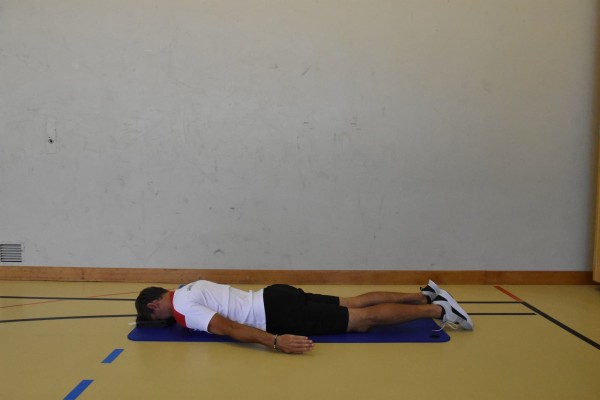
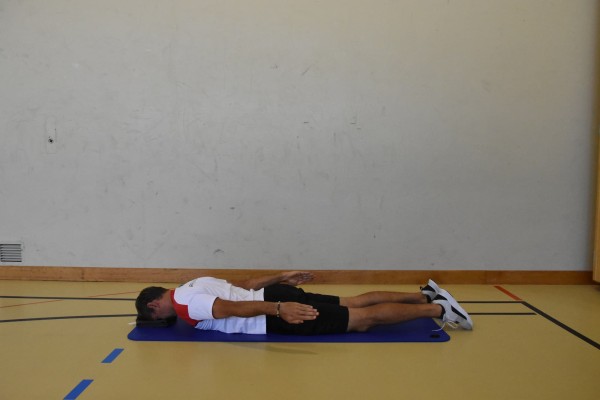
Lying on your stomach with your forehead resting on a folded cloth, feet shoulder-width apart, arms pointing diagonally backwards (A position) in extension of the body to each side. Arms stretched and completely relaxed. From this position, pull the shoulder blades together and raise the arms until the elbows are at shoulder height and the arms are parallel to the floor (palms facing inwards). Keep your arms straight throughout the entire movement. Exhale in the end position, hold the position for a moment, then inhale and lower your arms back to the starting position.
Attention:
Only the arms should be raised, nothing else - aim to isolate the upper back.
Harden:
Do not lower your arms completely; hold additional weight in your hands or on your arms.
Variation I:
Alternately raise one arm (instead of both at the same time).
Variation II:
Position on a flat bench or an incline bench.
2 weight cuffs/2 weight balls/dumbbells ► Make the exercise more difficult (additional weight)
Raising and lowering of the arms in prone position ► prone A raise
Power
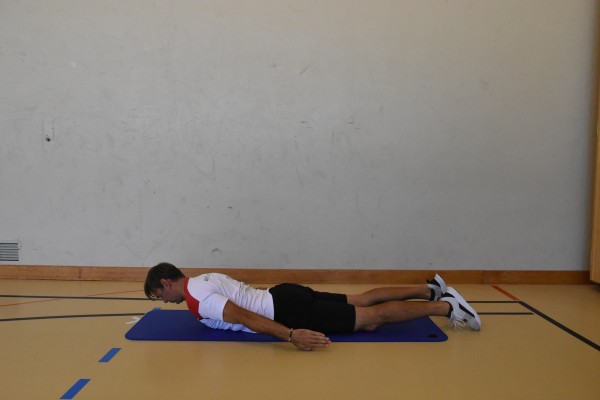
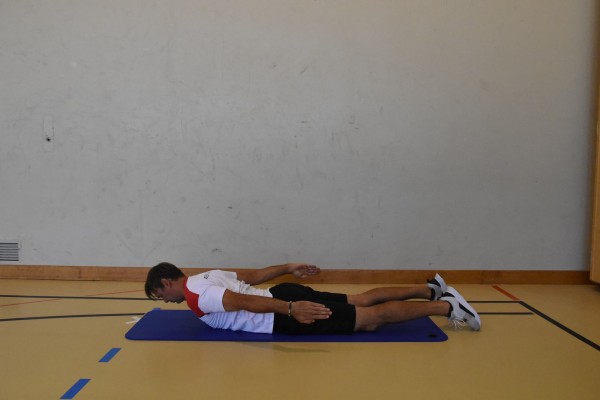
Prone position with upper body slightly raised, feet shoulder-width apart, arms pointing diagonally backwards (A position) in extension of the body to each side. Arms stretched and completely relaxed. From this position, pull the shoulder blades together and raise the arms until the elbows are at shoulder height and the arms are parallel to the floor (palms facing inwards). Keep your arms straight throughout the entire movement. Exhale in the end position, hold the position for a moment, then inhale and lower your arms back to the starting position.
Attention:
Only the arms should be raised, nothing else - aim to isolate the upper back.
Harden:
Do not lower your arms completely; hold additional weight in your hands or on your arms.
Variation I:
Alternately raise one arm (instead of both at the same time).
Variation II:
Position on a flat bench or an incline bench.
2 weight cuffs/2 weight balls/dumbbells ► Make the exercise more difficult (additional weight)
Raising and lowering of the arms in prone position ► prone I
Power
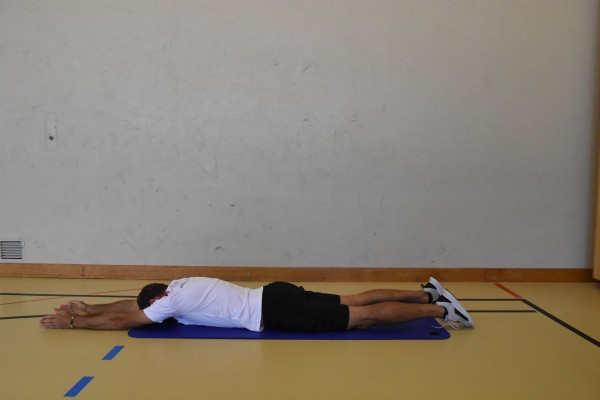
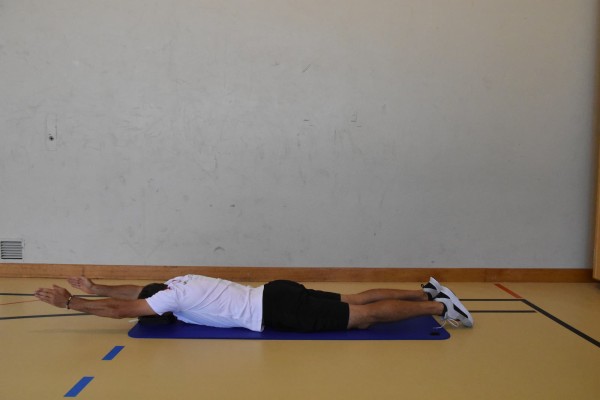
Lying on your stomach with your forehead resting on a folded cloth, feet shoulder-width apart, arms pointing forwards in extension of the body (I position). Arms stretched and completely relaxed. From this position, pull the shoulder blades together and raise the arms until the elbows are at shoulder height and the arms are parallel to the floor (palms facing inwards). Keep your arms straight throughout the entire movement. Exhale in the end position, hold the position for a moment, then inhale and lower your arms back to the starting position.
Attention:
Only the arms should be raised, nothing else - aim to isolate the upper back.
Harden:
Do not lower your arms completely; hold additional weight in your hands or on your arms.
Variation I:
Alternately raise one arm (instead of both at the same time).
Variation II:
Position on a flat bench or an incline bench.
2 weight cuffs/2 weight balls/dumbbells ► Make the exercise more difficult (additional weight)
Raising and lowering of the arms in prone position ► prone I raise
Power
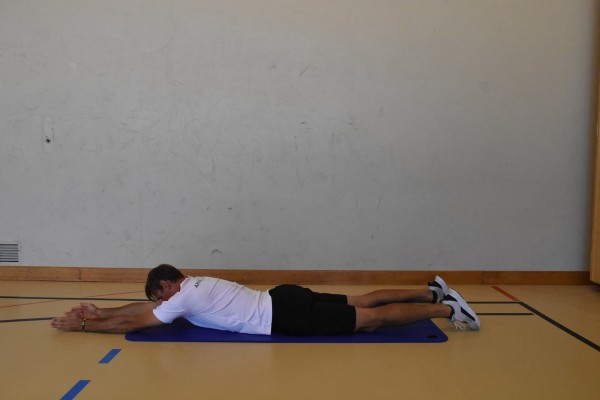
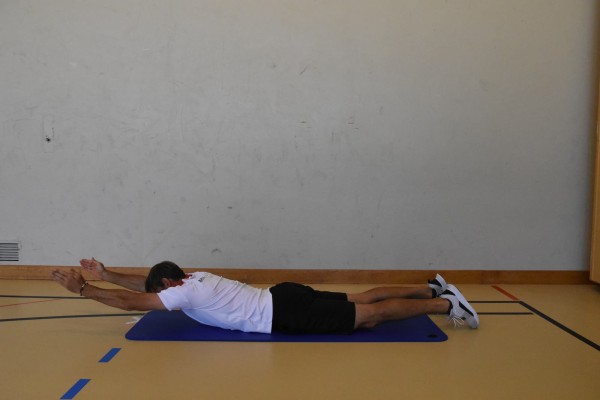
Prone position with upper body slightly raised, feet shoulder-width apart, arms pointing forwards in extension of the body (I position). Arms stretched and completely relaxed. From this position, pull the shoulder blades together and raise the arms until the elbows are at shoulder height and the arms are parallel to the floor (palms facing inwards). Keep your arms straight throughout the entire movement. Exhale in the end position, hold the position for a moment, then inhale and lower your arms back to the starting position.
Attention:
Only the arms should be raised, nothing else - aim to isolate the upper back.
Harden:
Do not lower your arms completely; hold additional weight in your hands or on your arms.
Variation I:
Alternately raise one arm (instead of both at the same time).
Variation II:
Position on a flat bench or an incline bench.
2 weight cuffs/2 weight balls/dumbbells ► Make the exercise more difficult (additional weight)
Raising and lowering of the arms in prone position ► prone weighted A
Power
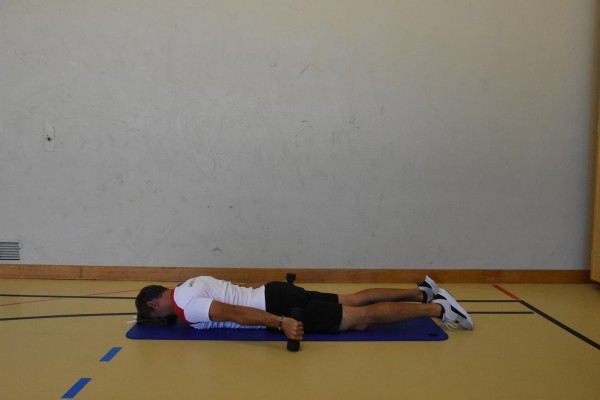
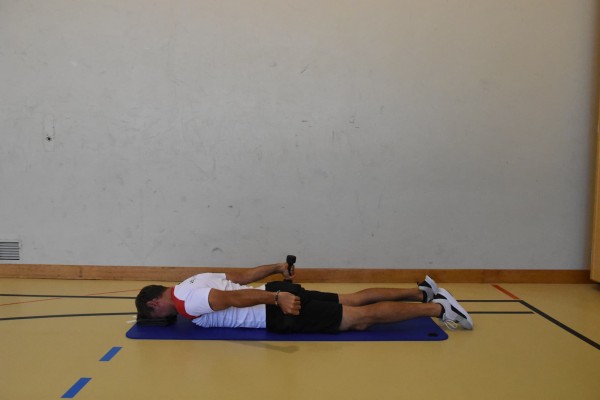
Lying on your stomach with your forehead resting on a folded cloth, feet shoulder-width apart, arms pointing diagonally backwards (A position) in extension of the body to each side. Arms stretched and completely relaxed. Hold a (light) dumbbell in each hand. From this position, pull the shoulder blades together and raise the arms until the elbows are at shoulder height and the arms are parallel to the floor (palms facing inwards). Keep your arms straight throughout the entire movement. Exhale in the end position, hold the position for a moment, then inhale and lower your arms back to the starting position.
Attention:
Only the arms should be raised, nothing else - aim to isolate the upper back.
Harden:
Do not lower your arms completely.
Variation I:
Alternately raise one arm (instead of both at the same time).
Variation II:
Position on a flat bench or an incline bench.
2 weight cuffs/2 weight balls/dumbbells
Raising and lowering of the arms in prone position ► prone weighted A raise
Power
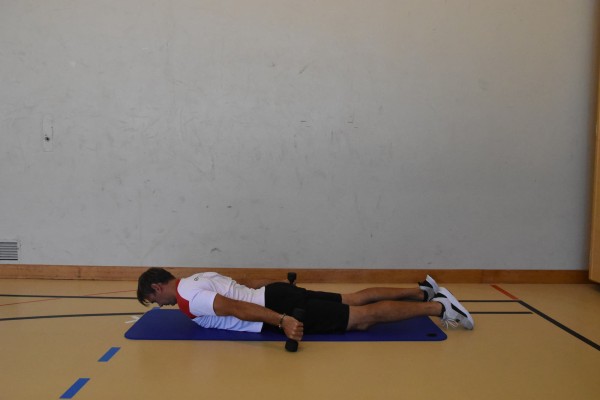
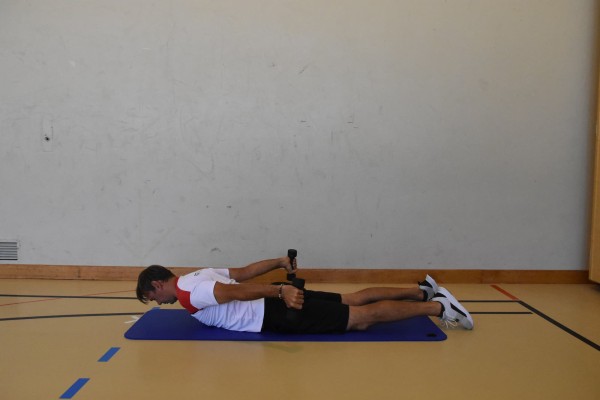
Prone position with upper body slightly raised, feet shoulder-width apart, arms pointing diagonally backwards (A position) in extension of the body to each side. Arms stretched and completely relaxed. Hold a (light) dumbbell in each hand. From this position, pull the shoulder blades together and raise the arms until the elbows are at shoulder height and the arms are parallel to the floor (palms facing inwards). Keep your arms straight throughout the entire movement. Exhale in the end position, hold the position for a moment, then inhale and lower your arms back to the starting position.
Attention:
Only the arms should be raised, nothing else - aim to isolate the upper back.
Harden:
Do not lower your arms completely.
Variation I:
Alternately raise one arm (instead of both at the same time).
Variation II:
Position on a flat bench or an incline bench.
2 weight cuffs/2 weight balls/dumbbells
Raising and lowering of the arms in prone position ► prone weighted I
Power
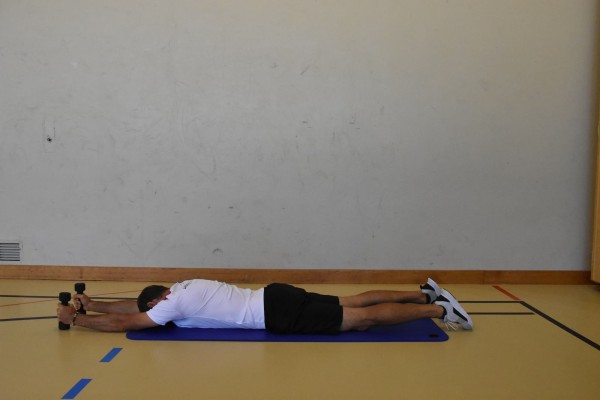
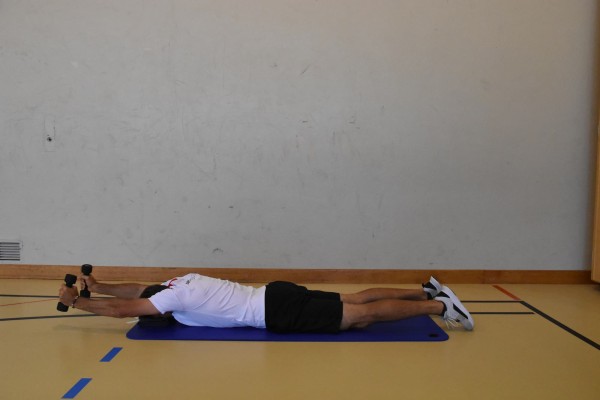
Lying on your stomach with your forehead resting on a folded cloth, feet shoulder-width apart, arms pointing forwards in extension of the body (I position). Arms stretched and completely relaxed. Hold a (light) dumbbell in each hand. From this position, pull the shoulder blades together and raise the arms until the elbows are at shoulder height and the arms are parallel to the floor (palms facing inwards). Keep your arms straight throughout the entire movement. Exhale in the end position, hold the position for a moment, then inhale and lower your arms back to the starting position.
Attention:
Only the arms should be raised, nothing else - aim to isolate the upper back.
Harden:
Do not lower your arms completely.
Variation I:
Alternately raise one arm (instead of both at the same time).
Variation II:
Position on a flat bench or an incline bench.
2 weight cuffs/2 weight balls/dumbbells
Raising and lowering of the arms in prone position ► prone weighted I raise
Power
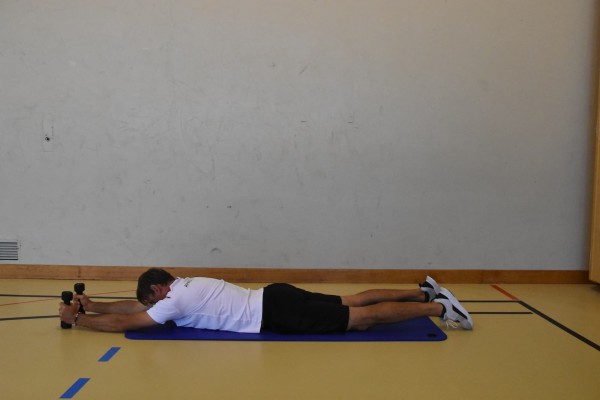
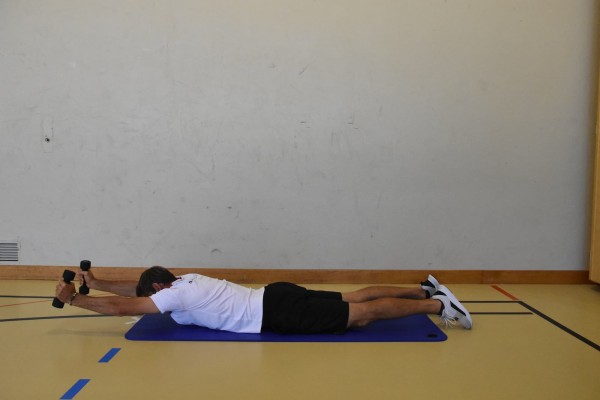
Prone position with upper body slightly raised, feet shoulder-width apart, arms pointing forwards in extension of the body (I position). Arms stretched and completely relaxed. Hold a (light) dumbbell in each hand. From this position, pull the shoulder blades together and raise the arms until the elbows are at shoulder height and the arms are parallel to the floor (palms facing inwards). Keep your arms straight throughout the entire movement. Exhale in the end position, hold the position for a moment, then inhale and lower your arms back to the starting position.
Attention:
Only the arms should be raised, nothing else - aim to isolate the upper back.
Harden:
Do not lower your arms completely.
Variation I:
Alternately raise one arm (instead of both at the same time).
Variation II:
Position on a flat bench or an incline bench.
2 weight cuffs/2 weight balls/dumbbells
Raising and lowering of the arms in prone position ► prone weighted Y
Power
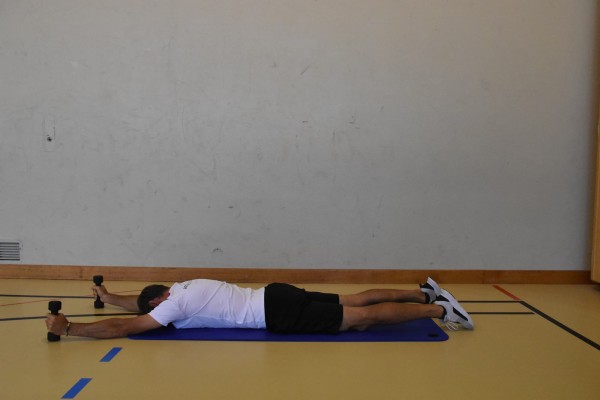
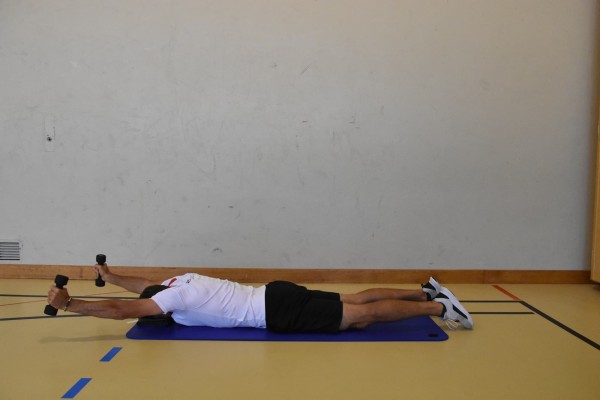
Lying on your stomach with your forehead resting on a folded cloth, feet shoulder-width apart, arms pointing diagonally forwards (Y position) in extension of the body to each side. Arms stretched and completely relaxed. Hold a (light) dumbbell in each hand. From this position, pull the shoulder blades together and raise the arms until the elbows are at shoulder height and the arms are parallel to the floor (palms facing inwards). Keep your arms straight throughout the entire movement. Exhale in the end position, hold the position for a moment, then inhale and lower your arms back to the starting position.
Attention:
Only the arms should be raised, nothing else - aim to isolate the upper back.
Harden:
Do not lower your arms completely.
Variation I:
Alternately raise one arm (instead of both at the same time).
Variation II:
Position on a flat bench or an incline bench.
2 weight cuffs/2 weight balls/dumbbells
Raising and lowering of the arms in prone position ► prone weighted Y raise
Power
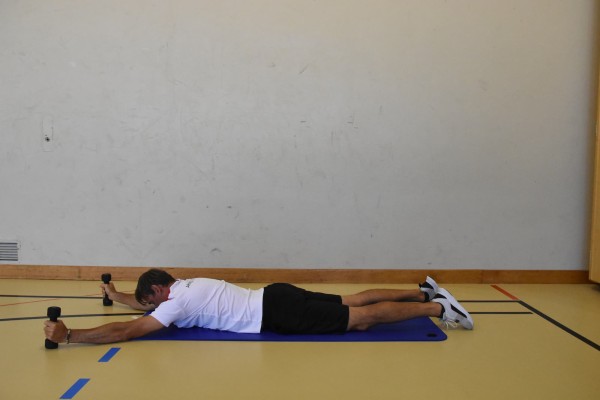
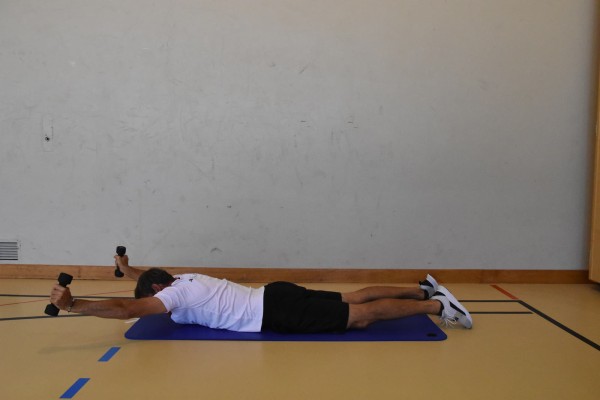
Prone position with upper body slightly raised, feet shoulder-width apart, arms pointing diagonally forwards (Y position) in extension of the body to each side. Arms stretched and completely relaxed. Hold a (light) dumbbell in each hand. From this position, pull the shoulder blades together and raise the arms until the elbows are at shoulder height and the arms are parallel to the floor (palms facing inwards). Keep your arms straight throughout the entire movement. Exhale in the end position, hold the position for a moment, then inhale and lower your arms back to the starting position.
Attention:
Only the arms should be raised, nothing else - aim to isolate the upper back.
Harden:
Do not lower your arms completely.
Variation I:
Alternately raise one arm (instead of both at the same time).
Variation II:
Position on a flat bench or an incline bench.
2 weight cuffs/2 weight balls/dumbbells
Raising and lowering of the arms in prone position ► prone weighted YTWAI/YTW/YTI/YTWI/YTAI
Power
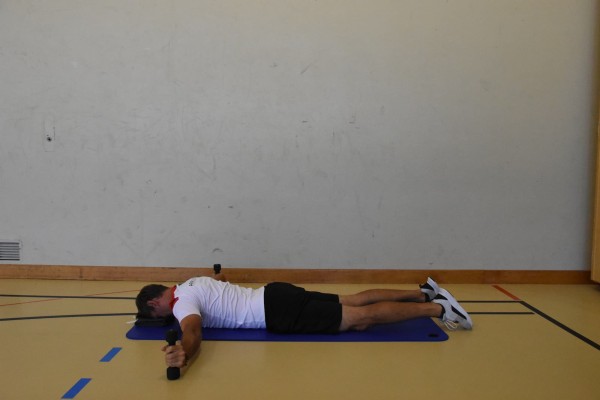
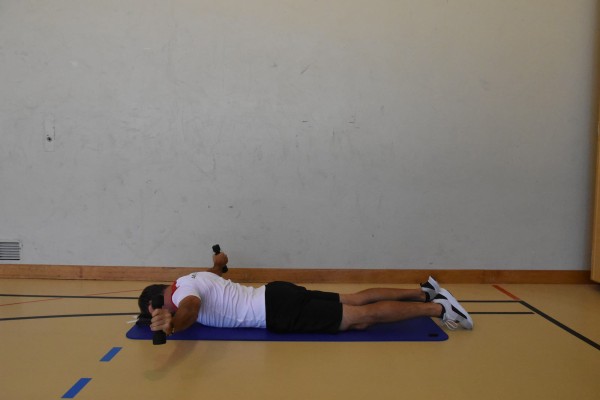
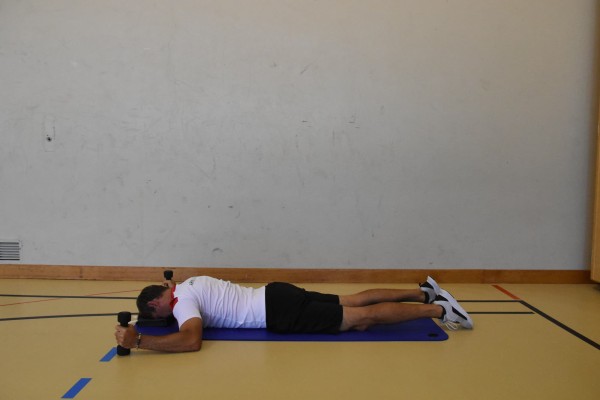
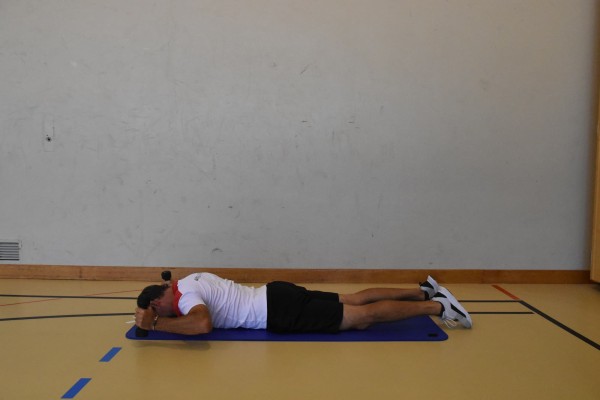
Lie on your stomach with your forehead resting on a folded cloth, arms completely relaxed on the floor, hold a (light) dumbbell in each hand, feet shoulder-width apart. From various starting positions, pull the shoulder blades together and raise the arms until the elbows are at shoulder height and the arms are parallel to the floor. Exhale in the end position, hold the position for a moment, then inhale and lower your arms back to the starting position.
Starting positions:
I-position: Arms point forwards in extension of the body (palms facing inwards)
Y-position: Arms point diagonally forwards in extension of the body to the respective side (palms facing inwards)
T-position: Arms pointing to the respective side (palms facing forwards or downwards)
W-position: arms bent, elbows close to the body, arms pointing diagonally forwards to the respective side (palms facing diagonally inwards)
A-position: arms pointing diagonally backwards in extension of the body to the respective side (palms facing inwards)
Possible sequences (examples):
YTWAI
YTW
YTI
YTWI
YTAI
Attention:
Only the arms should be raised, nothing else - aim to isolate the upper back.
Harden:
Do not lower your arms completely; hold additional weight in your hands or on your arms.
Variation I:
Alternately raise one arm (instead of both at the same time).
Variation II:
Position on a flat bench or an incline bench.
2 weight cuffs/2 weight balls/dumbbells
Raising and lowering of the arms in prone position ► prone weighted YTWAI/YTW/YTI/YTWI/YTAI raise
Power
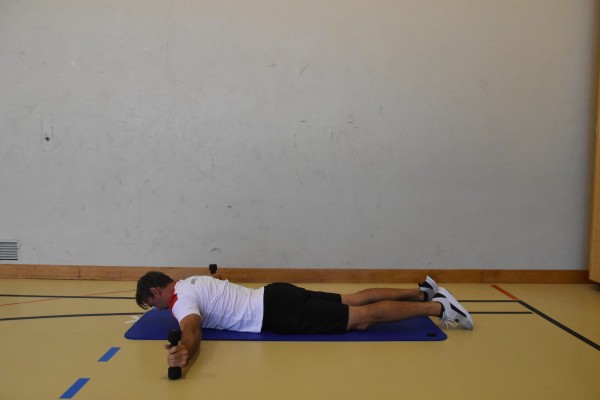
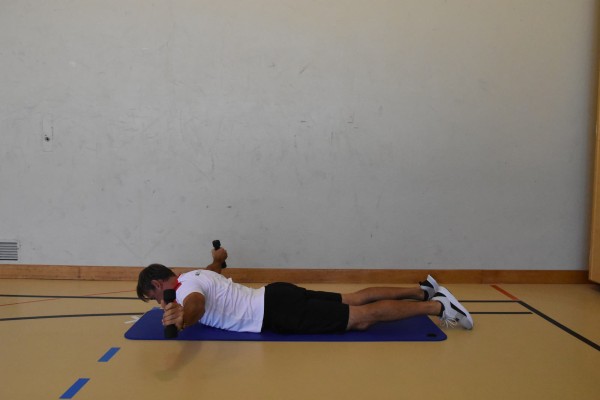
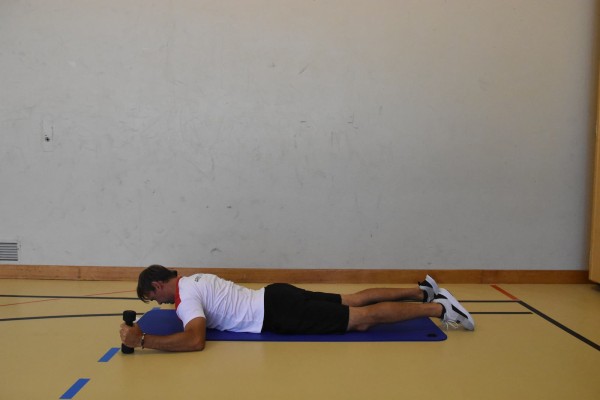
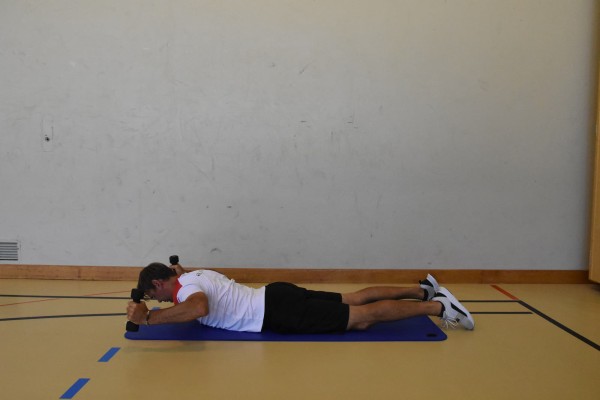
Prone position with upper body slightly raised, arms completely relaxed on the floor, hold a (light) dumbbell in each hand, feet shoulder-width apart. From various starting positions, pull the shoulder blades together and raise the arms until the elbows are at shoulder height and the arms are parallel to the floor. Exhale in the end position, hold the position for a moment, then inhale and lower your arms back to the starting position.
Starting positions:
I-position: Arms point forwards in extension of the body (palms facing inwards)
Y-position: Arms point diagonally forwards in extension of the body to the respective side (palms facing inwards)
T-position: Arms pointing to the respective side (palms facing forwards or downwards)
W-position: arms bent, elbows close to the body, arms pointing diagonally forwards to the respective side (palms facing diagonally inwards)
A-position: arms pointing diagonally backwards in extension of the body to the respective side (palms facing inwards)
Possible sequences (examples):
YTWAI
YTW
YTI
YTWI
YTAI
Attention:
Only the arms should be raised, nothing else - aim to isolate the upper back.
Harden:
Do not lower your arms completely; hold additional weight in your hands or on your arms.
Variation I:
Alternately raise one arm (instead of both at the same time).
Variation II:
Position on a flat bench or an incline bench.
2 weight cuffs/2 weight balls/dumbbells ► Make the exercise more difficult (additional weight)
Raising and lowering of the arms in prone position ► prone Y
Power
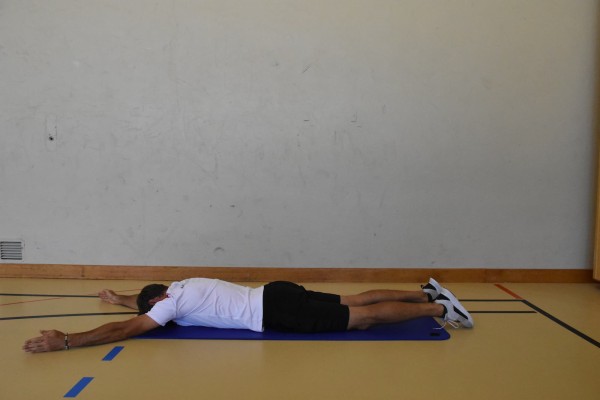
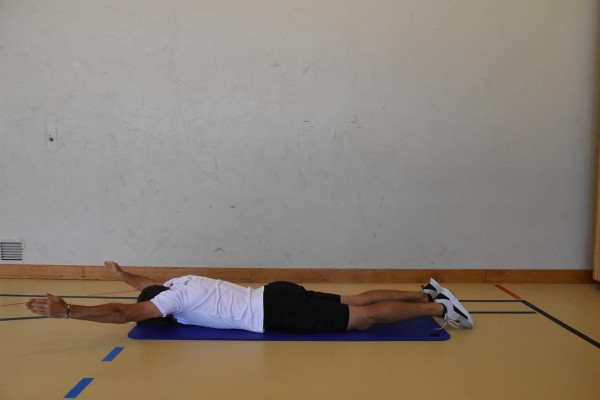
Lying on your stomach with your forehead resting on a folded cloth, feet shoulder-width apart, arms pointing diagonally forwards (Y position) in extension of the body to each side. Arms stretched and completely relaxed. From this position, pull the shoulder blades together and raise the arms until the elbows are at shoulder height and the arms are parallel to the floor (palms facing inwards). Keep your arms straight throughout the entire movement. Exhale in the end position, hold the position for a moment, then inhale and lower your arms back to the starting position.
Attention:
Only the arms should be raised, nothing else - aim to isolate the upper back.
Harden:
Do not lower your arms completely; hold additional weight in your hands or on your arms.
Variation I:
Alternately raise one arm (instead of both at the same time).
Variation II:
Position on a flat bench or an incline bench.
2 weight cuffs/2 weight balls/dumbbells ► Make the exercise more difficult (additional weight)
Raising and lowering of the arms in prone position ► prone Y raise
Power
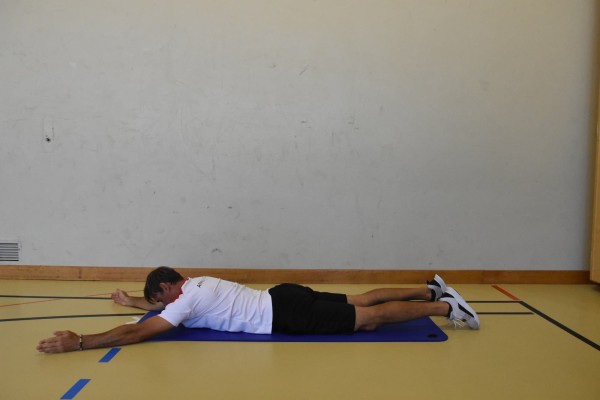
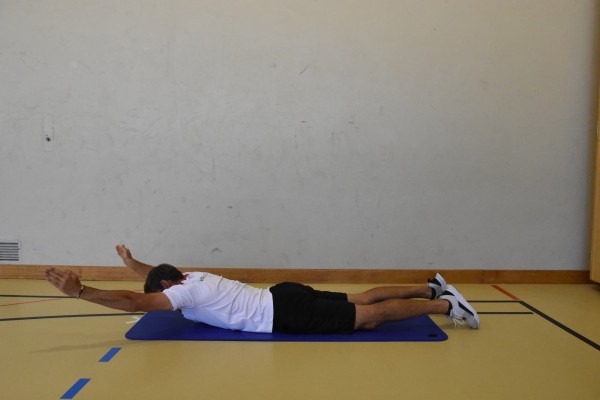
Prone position with upper body slightly raised, feet shoulder-width apart, arms pointing diagonally forwards (Y position) in extension of the body to each side. Arms stretched and completely relaxed. From this position, pull the shoulder blades together and raise the arms until the elbows are at shoulder height and the arms are parallel to the floor (palms facing inwards). Keep your arms straight throughout the entire movement. Exhale in the end position, hold the position for a moment, then inhale and lower your arms back to the starting position.
Attention:
Only the arms should be raised, nothing else - aim to isolate the upper back.
Harden:
Do not lower your arms completely; hold additional weight in your hands or on your arms.
Variation I:
Alternately raise one arm (instead of both at the same time).
Variation II:
Position on a flat bench or an incline bench.
2 weight cuffs/2 weight balls/dumbbells ► Make the exercise more difficult (additional weight)
Raising and lowering of the arms in prone position ► prone YTWAI/YTW/YTI/YTWI/YTAI
Power
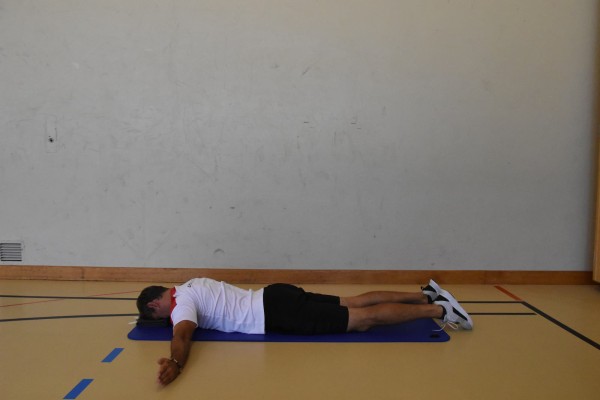
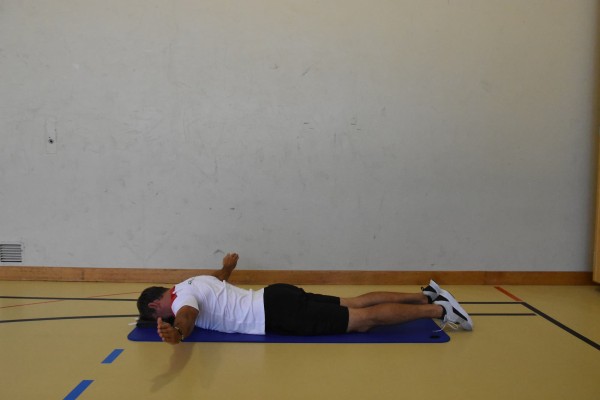
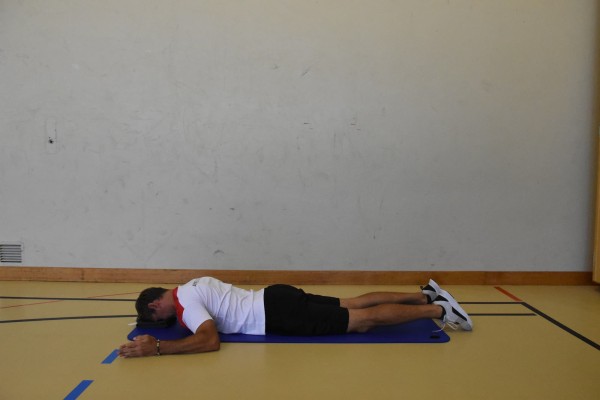
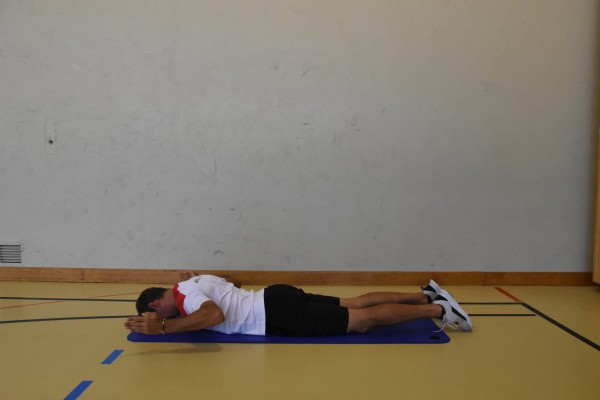
Lie on your stomach with your forehead resting on a folded cloth, arms completely relaxed on the floor, feet shoulder-width apart. From various starting positions, pull the shoulder blades together and raise the arms until the elbows are at shoulder height and the arms are parallel to the floor. Exhale in the end position, hold the position for a moment, then inhale and lower your arms back to the starting position.
Starting positions:
I-position: Arms point forwards in extension of the body (palms facing inwards)
Y-position: Arms point diagonally forwards in extension of the body to the respective side (palms facing inwards)
T-position: Arms pointing to the respective side (palms facing forwards or downwards)
W-position: arms bent, elbows close to the body, arms pointing diagonally forwards to the respective side (palms facing diagonally inwards)
A-position: arms pointing diagonally backwards in extension of the body to the respective side (palms facing inwards)
Possible sequences (examples):
YTWAI
YTW
YTI
YTWI
YTAI
Attention:
Only the arms should be raised, nothing else - aim to isolate the upper back.
Harden:
Do not lower your arms completely; hold additional weight in your hands or on your arms.
Variation I:
Alternately raise one arm (instead of both at the same time).
Variation II:
Position on a flat bench or an incline bench.
2 weight cuffs/2 weight balls/dumbbells ► Make the exercise more difficult (additional weight)