
Exercises (3274)
Einstein
Light-Contact
Partner work

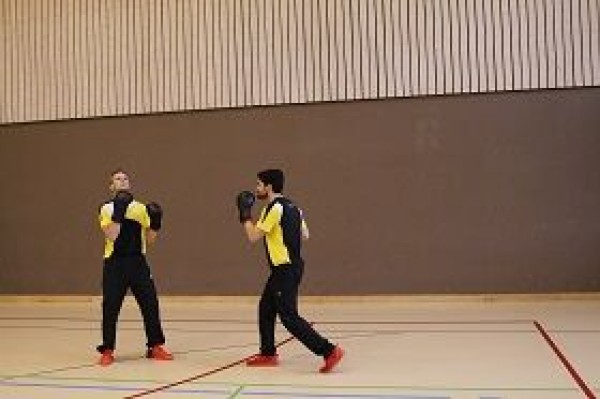

Two participants stand on two lines about 5 metres apart. One participant calls out an addition with two-digit numbers (e.g. "34 plus 23") and then runs to their opponent to score a hit. If he scores before the attacked player can complete the task, he receives one point. The defender receives a point if he states the result before he is hit. In the next round, the roles are swapped. Who has scored a certain number of points first or has scored more points after a certain time?
Variant:
Only shoulder and torso hits are counted.
Participant:
1 pair of boxing gloves
Ice hockey: big circles
Stimulate circulation
Group work
3 players per group
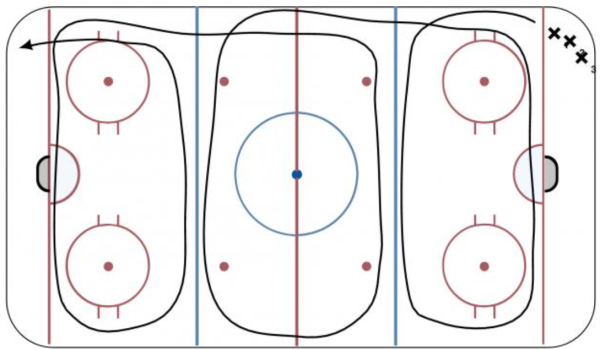
The players form three large circles around the face-off points in the three zones (offensive, neutral and defensive zones).
the whole pitch
Ice hockey: small circles
Stimulate circulation
Group work
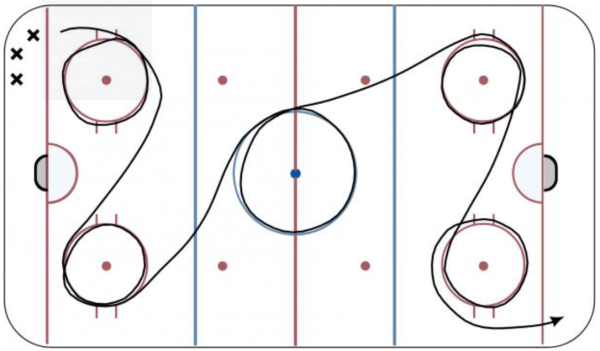
The players run round the five circles on the playing field.
forwards
backwards
keeping your gaze fixed on the centre at all times (switching from running forwards to running backwards)
The whole pitch
Ice hockey: skating the lines
Increase pulse
Group work
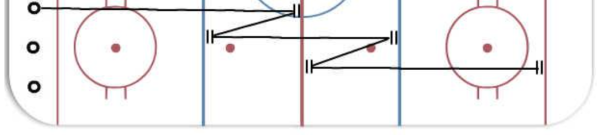
The players run from line to line, stopping briefly each time they change direction (do not run in circles). When stopping, they must always keep their eyes on the centre of the pitch. The exercise is carried out twice (once on each side of the pitch).
The whole pitch
Ice hockey: fits
Stimulate circulation
Partner work
Two players stand facing each other (vis-à-vis) a few metres apart. Player A passes the first puck to Player B. Player B receives the puck and sets it slightly to one side. Player A passes the second puck to Player B, who plays it straight back. Player A now receives this puck, moves it slightly to one side, and then plays the next pass straight back. The exercise continues in this way without interruption. After a while, switch from the forehand to the backhand side, or incorporate flip passes.
2 pucks per group
Ice hockey: fits
Stimulate circulation
Group work
4–5 players per group
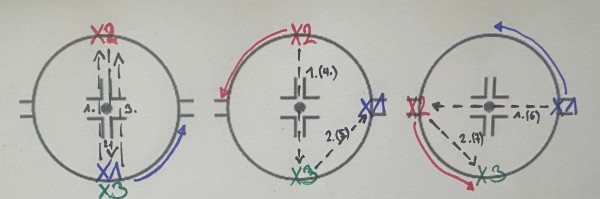
X1 plays to X2
X2 plays back to X1
X1 plays back to X2 and moves counterclockwise after passing (1/4 circle)
X2 plays to X3 (position taken by X1) and also moves counterclockwise after passing (1/4 circle)
X3 plays to X1
X1 plays to X2 and moves counterclockwise again after the feed (1/4 circle); assumes the starting position of X2 accordingly
X2 plays to X3 and joins the waiting group (1/4 circle shift)
X3 and X1 restart the exercise
After a few passes change direction (rotate clockwise).
Later, the starting player can independently decide in which direction to start.
1 centre circle per group
Ice hockey: fits (3 v 1 / 4 v 1)
Stimulate circulation
Group work
Groups of 4 (3:1) or groups of 5 (4:1)
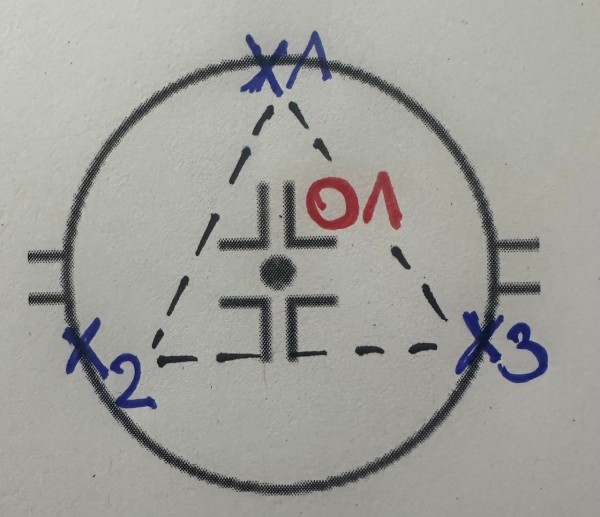
Three (or four) players position themselves around the face-off circle and attempt to keep possession of the puck through quick and precise passing amongst themselves. A defender attempts to intercept or win the puck. After losing possession of the puck (e.g. a misplaced pass, fumbling the puck whilst receiving it, or a pass intercepted by a defender), the player who lost the puck swaps roles with the defender.
1 centre circle per group
Ice hockey: passing and finishing (horseshoe)
Forms of play / exercises
Carry out the drill on both sides, each targeting one goal (X8/X7/X6 analogous to X1/X4/X5), or start the drill on one side, finishing with a shot at one goal, and switch the starting side after a while (passers positioned at the top, spread across both centre circles).
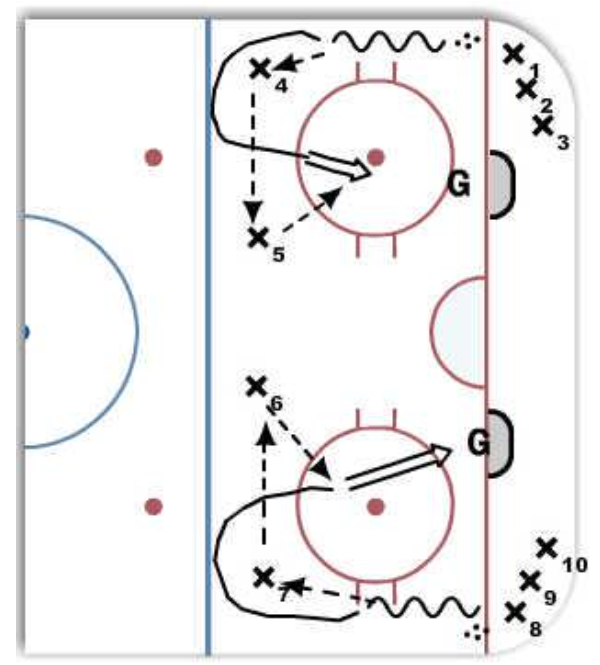
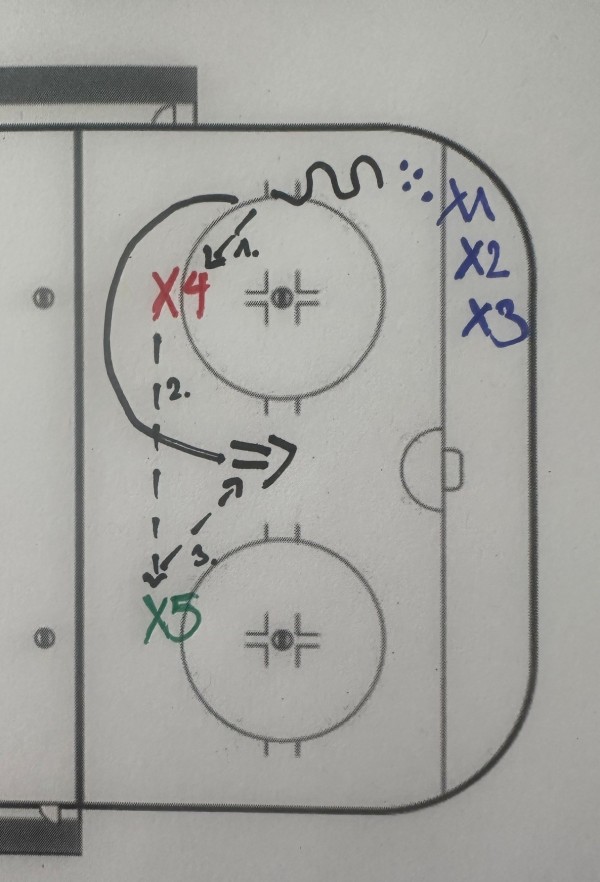
X1 moves a few metres, then passes X4, X1 continues past X4, going round it
X4 passes X5, X1 moves between X4 and X5
X5 passes X1, X1 completes the manoeuvre
Variant:
Assign fixed players to positions X4/X5 and substitute players from time to time, or rotate two players at a time between positions X4/X5 (X1→X5→X4→group)
Half the pitch (1–2 goals)
Move your elbows backwards while standing
Power
Individual work
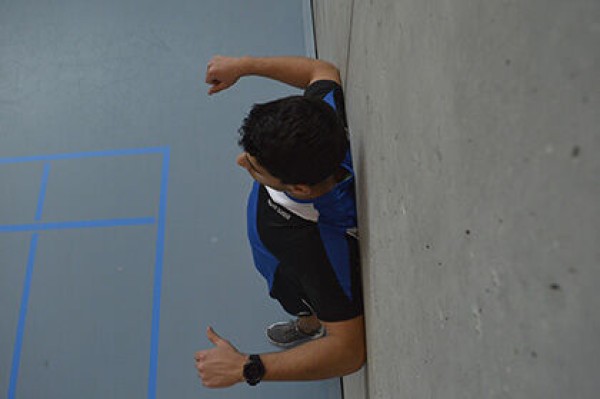

Stand leaning diagonally against the wall (back against the wall), arms bent at the side at shoulder height (hands facing forwards), push your elbows back (upper body away from the wall) and return to the starting position.
Attention:
Do not rest your shoulder blades completely on the wall.
Lighten:
Stand upright.
Harden:
Foot further away from the wall (increase the incline).
1 wall
Move your elbows forwards while standing
Power
Individual work
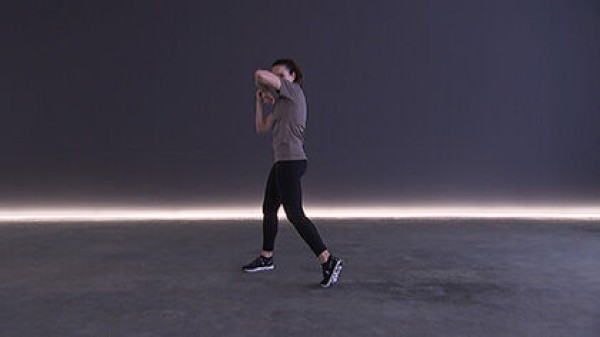
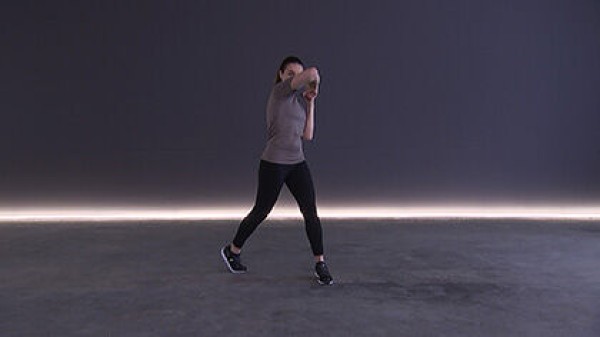
A distinction is made between the left-handed and right-handed stance. Right-handers take the left stance (left foot in front), while left-handers take the right stance (right foot in front). The left-hand stance: The left foot is placed one step forwards from a parallel stance approximately shoulder-width apart so that the right hand is behind. The right hand corresponds to the striking hand, the left hand to the leading hand. The distance between the two feet is approximately one shoulder width, with the feet on a diagonal to each other. The front foot stands on the entire sole, the heel of the back foot is raised. Both feet point forwards and the weight is evenly distributed over both legs. The front shoulder is turned slightly inwards. The whole body is slightly crouched, the knees are slightly bent and soft. The striking hand is placed in front of the chin and rests against the body. The lead hand is in front at eye level. The fists point outwards with the back. The arms are in front of the body and the elbows point downwards so that the arms cover the body.
Alternate between bringing one elbow forwards at eye level (pointing forwards/upper arm in the direction of your gaze) and turning your upper body with it.
Attention:
Always hold your arms up (chin or eye level).
Lighten:
Lower your elbows forward (chest height).
Harden:
Hold additional weight on your arms or in your hands.
2 weight cuffs/weight balls/dumbbells ► make the exercise more difficult (additional weight)
Bring elbows and knees together crosswise while seated alternating ► rotational crunch
Power
Individual work
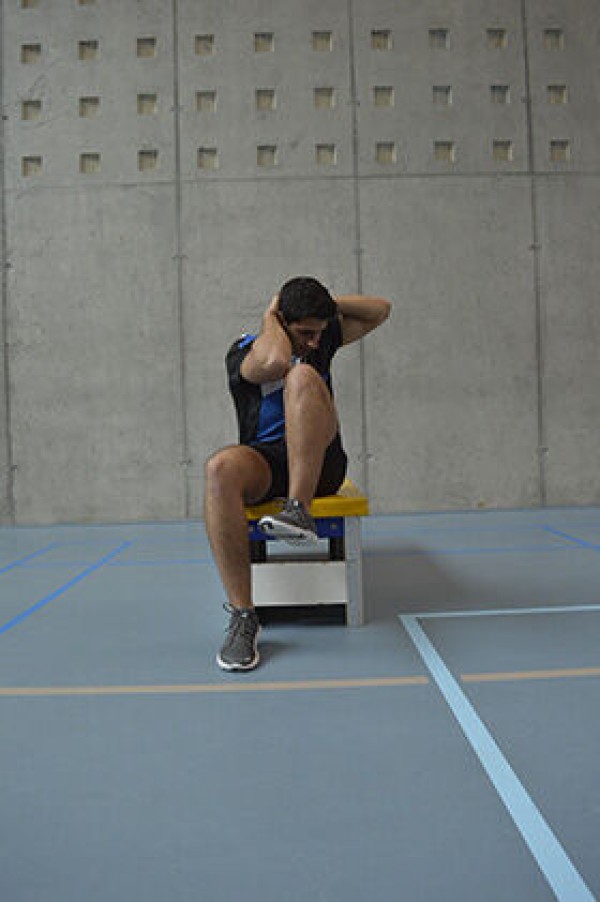
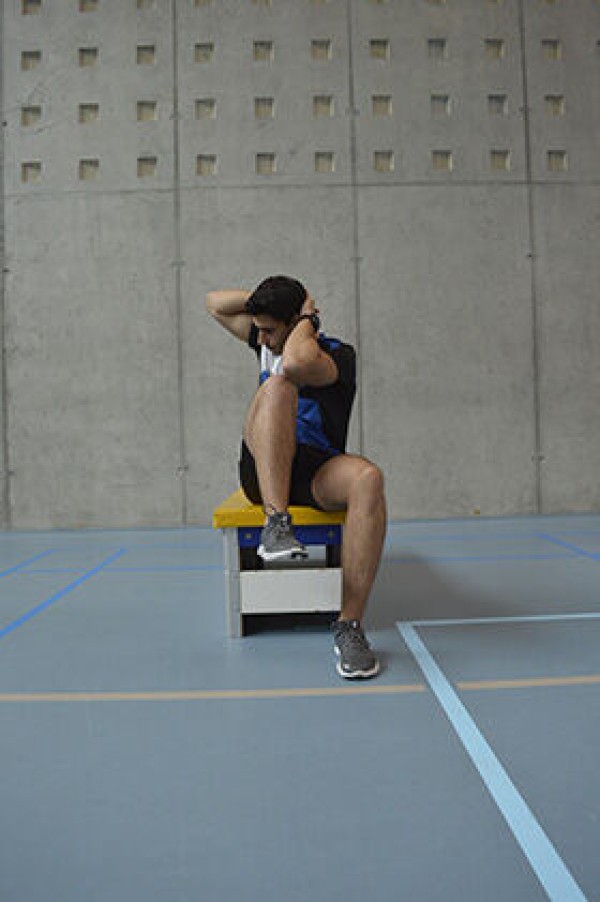
Sit upright on the Swedish box (or a long bench), place your arms bent next to your head (hands on the back of your neck), bring your elbows and knees together by lifting each leg and lowering your upper body crosswise in front of your stomach. Switch sides after each exercise.
Attention:
Do not fold your elbows together/bring them in front of your face.
Lighten:
Do not bring your elbows and knees fully together.
Harden:
Add weight to your legs.
2-3 vaulting box elements (incl. top section) or 1 long bench
2 weight cuffs ► to make the exercise more difficult (additional weight)
Bring your elbows and knees together crosswise while standing (left) ► step up
Power
Individual work
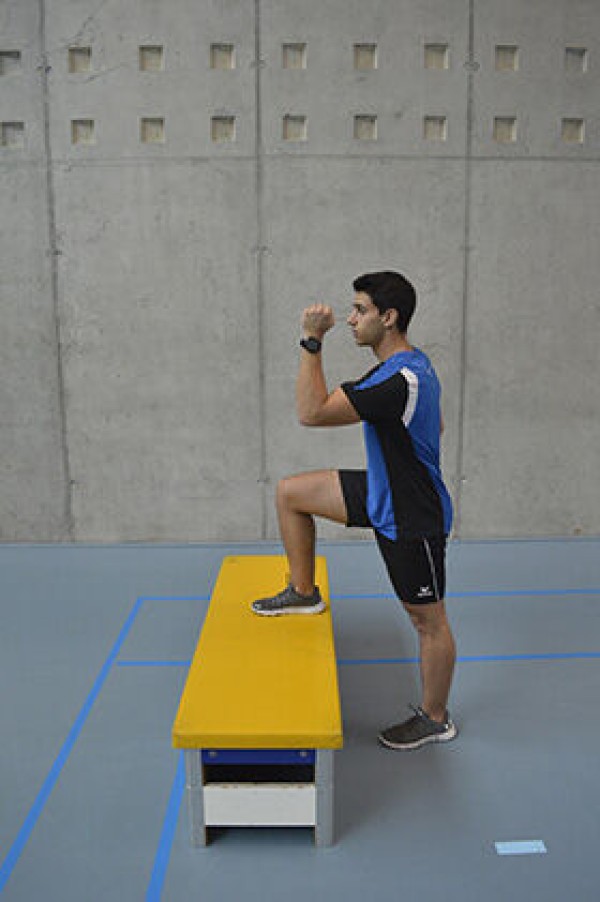
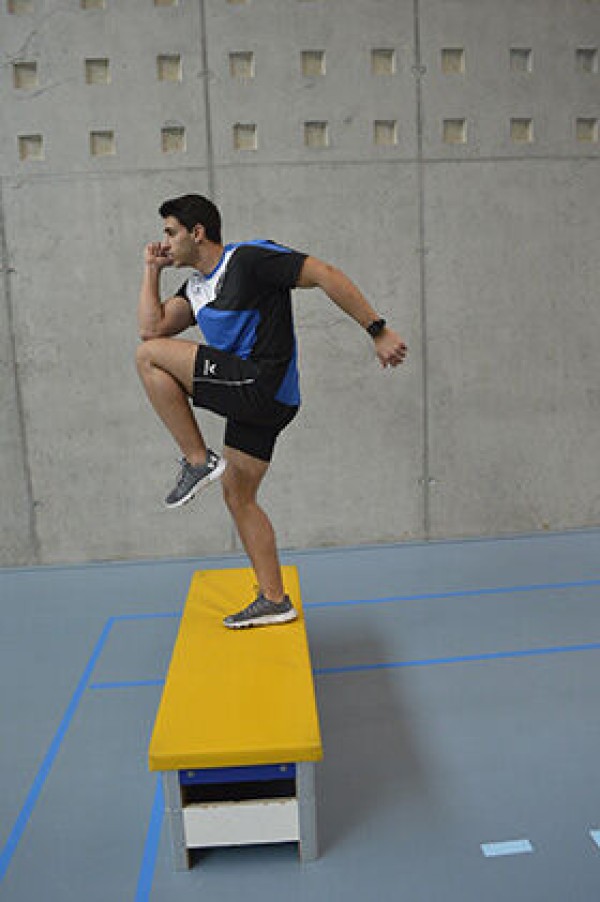
Stand on one leg in front of the swinging box elements/long bench (left), place the other (right) leg on the top of the swinging box/long bench, step onto the box element/long bench and simultaneously bring the knee of the swinging leg together with the opposite elbow crosswise, then return directly to the starting position.
Attention:
Keep your back straight, keep the knee of the supporting leg centred over the foot (do not bend forwards).
Lighten:
Lower element (upper part of the swinging box only) or no element at all.
Harden:
Additional weight on the feet, higher element.
2 vaulting box elements (incl. top section) or 1 long bench
2 weight cuffs ► make the exercise more difficult (additional weight)
1-2 additional box elements ► make the exercise more difficult (position)
Bring elbows and knees together crosswise while standing (right) ► step up
Power
Individual work


Stand on one leg in front of the swinging box elements/long bench (right), place the other (left) leg on the top of the swinging box element/long bench, step onto the box element/long bench and simultaneously bring the knee of the swinging leg together with the opposite elbow crosswise, then return directly to the starting position.
Attention:
Keep your back straight, keep the knee of the supporting leg centred over the foot (do not bend forwards).
Lighten:
Lower element (upper part of the swinging box only) or no element at all.
Harden:
Additional weight on the feet, higher element.
2 vaulting box elements (incl. top section) or 1 long bench
2 weight cuffs ► make the exercise more difficult (additional weight)
1-2 additional box elements ► make the exercise more difficult (position)
Bring elbow and knee together crosswise in standing position alternating ► standing diagonal crunch / knee to elbow crunch
Power
Individual work
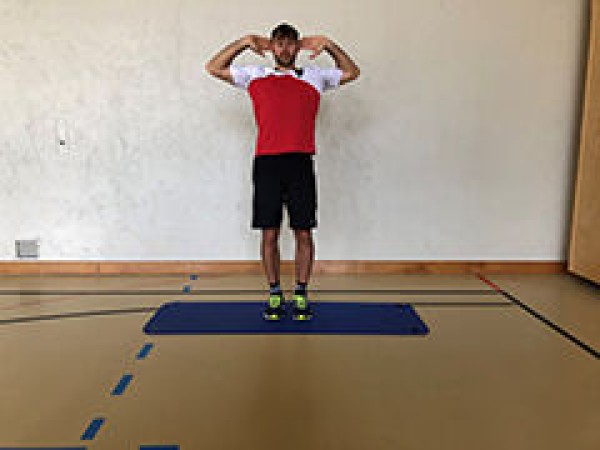
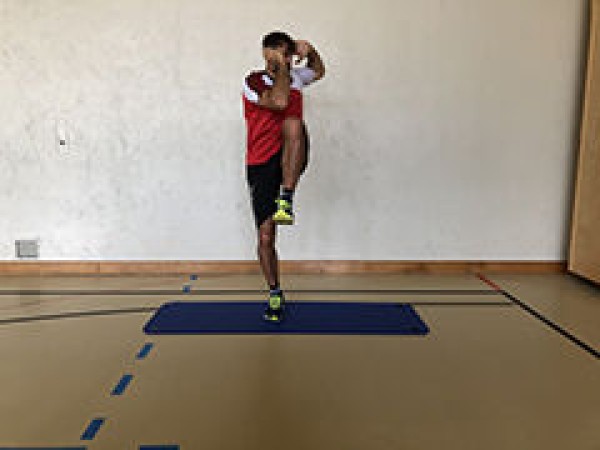
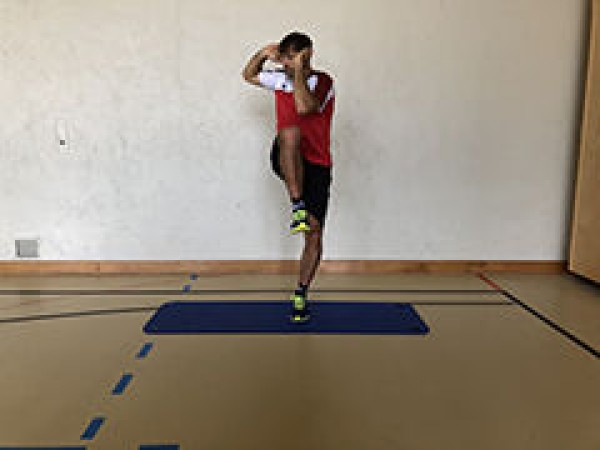
Stand upright, feet hip-width apart. Place your hands loosely at your temples or behind your head (elbows pointing to the side). Tense your stomach slightly, shoulders loose. Raise one leg from this position. At the same time, rotate the upper body so that the elbow is crossed towards the knee. Roll the upper body in slightly, the movement comes from the abdomen. Then lower your leg and roll up your upper body and return to the starting position. Switch sides after each repetition. Exhale when your elbows and knees come together and inhale when you return to the starting position.
Attention:
Relax your neck, do not pull with your hands on your head. Avoid swinging, work slowly and in a controlled manner. Pelvis remains stable, abdomen remains active throughout.
Lighten:
Hold your hands on your hips or in front of your chest, lift your knees only slightly, turn your upper body only slightly, do not curl up too much.
Harden:
Place your hands behind your head (open your elbows wide), lift your knees high and explosively, actively pull your elbows and knees together, curl your upper body up more. Hold the end position for 2-3 seconds. Additional weight on the feet. Exercise the same side several times without putting the leg down (let the knee float down briefly).
2 weight cuffs ► make the exercise more difficult (additional weight)
Bring elbows and knees together crosswise in four-footed stance alternating ► quadruped reach
Power
Individual work
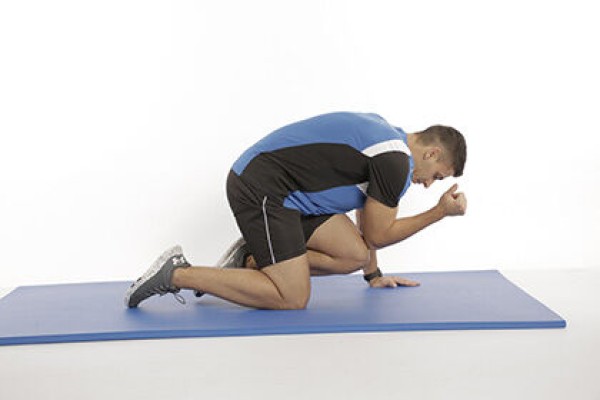

Stand on four feet, stretch one arm and one leg crosswise, bring knees and elbows together under the body (approximately chest height) and return to the starting position (without lowering). Switch sides after each exercise.
Attention:
Head, torso, hips and leg (and outstretched arm) form roughly one line.
Lighten:
Do not raise arms and legs to a horizontal position.
Harden:
Hold additional weight on the legs/arms and/or in the hands.
2-4 weight cuffs/2 weight balls/dumbbells ► make the exercise more difficult (additional weight)
Relaxation
Relaxation
Individual work
The participants lie on their backs with their eyes closed (on a soft surface, e.g. a soft mat in the hall or dry grass in the field) and relax to appropriately calm music (or a relaxation story).
Variant:
Instead of calm music, an information CD (teaching exercise: e.g. training methodology) is played, whereby the basic idea of relaxation is somewhat lost.
Per participant:
1 soft mat
Music (quiet)
Relaxation
Relaxation
Individual work
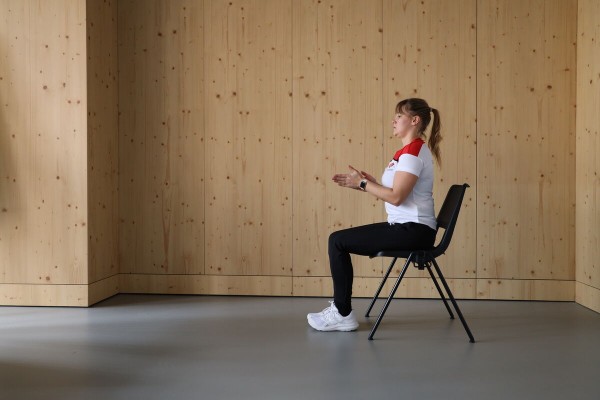
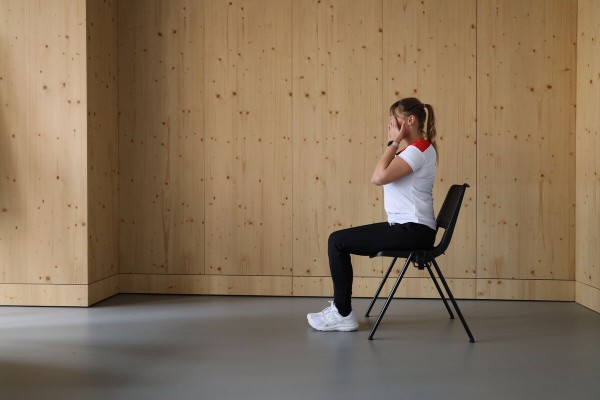
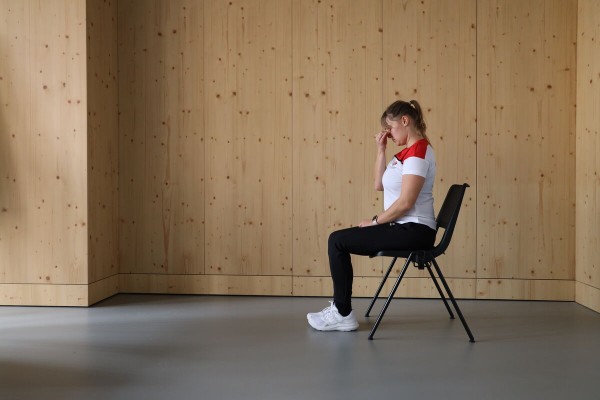
To generate heat, the palms of the hands are rubbed together quickly. Then place the warmed palms over the closed eyes. The pleasant warmth should relax the eye muscles. Alternatively, the thumb and index finger of one hand can be placed on each eye to massage them gently using circular movements.
1 (office) chair
Explanation of the exercises/items/test forms
Transition main part
The sports leader explains the various exercises/posts or test forms to the participants and points out the correct execution (including organisational instructions) as well as possible misalignments/error patterns.
Explanation of the exercises/items/test forms
Introduction/Info
The sports leader explains the various exercises/posts or test forms to the participants and points out the correct execution (including organisational instructions) as well as possible misalignments/error patterns.
Explanation of the exercises/items/test forms
Miscellaneous
The sports leader explains the various exercises/posts or test forms to the participants and points out the correct execution (including organisational instructions) as well as possible misalignments/error patterns.
First steps
Coordination exercises
Individual work
Once you have mastered the basic position, you can try your first steps. It is important to feel the strap with the forefoot before putting the whole foot down. This means you don't have to look at the strap to know where it is. Before you remove the back foot from the strap, you should place it on your toes to shift your centre of gravity to the front foot.
Easier:
Stretch the slackline tightly over a short distance (3-5m); help a partner by holding their hand (always go with the balancing movement and only stabilise when the slackliner is almost falling).
Harder:
Walk backwards; stretch the slackline over a long distance.
1 Slackline
Extension of the arms on a slope (pull-up position / passive slope) ► dead hang / passive hang
Power
Individual work
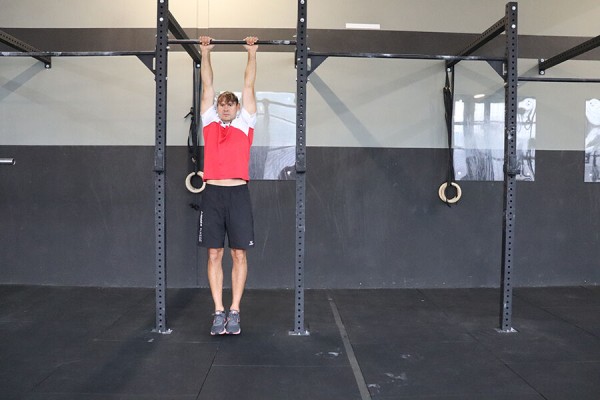
Hold on to the horizontal bar in a hanging position (full body extension, arms stretched out overhead in a high position - passive hang) (the position can be assumed with the help of a bench or a chair), the hands grasp the bar with an overhand grip (palms facing backwards), the arms are positioned shoulder-width apart. Hold the position for as long as possible (hollow position). After the exercise, slowly place your feet back on the chair or bench before releasing your hands from the pole or dropping to the floor to stand.
Attention:
Let your upper body hang still (no swinging; tense your core muscles); arms are fully extended.
Lighten:
Do the exercise for a shorter period of time; use the elastic band as support (place your feet on the band).
Harden:
Additional weight; do the exercise with one arm.
Variant I:
Knee bent.
Variant II:
Grab the bar with a neutral grip or underhand grip.
1 horizontal bar
1 elasticated rubber band ► make the exercise easier (support)
2 weight cuffs/1 weight waistcoat ► make the exercise more difficult (additional weight)
Extension of the arms in a hanging position
Power
Individual work
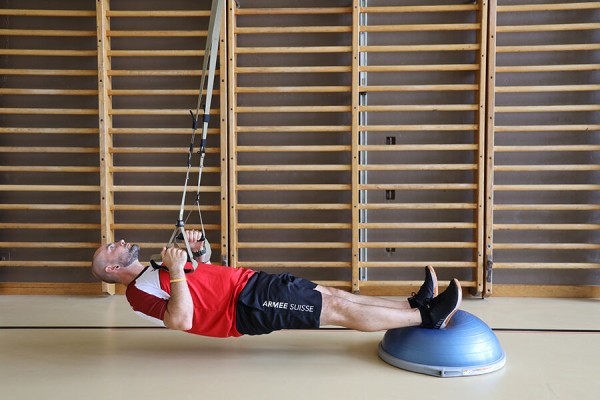
Lie on your back with your legs supported by your heels on the balance hemisphere and your hands gripping the handles of the sling trainer (lower height, hammer grip). Bend your arms to raise your upper body and bring it into a horizontal position. Hold the position.
Attention:
Keep your body taut (no sagging); keep your head in a neutral position.
Lighten:
Let your legs rest on the floor.
Harden:
Heels supported on the balance board; additional weight.
Variation:
Bend and stretch arms (raise and lower upper body).
1 sling trainer
1 balance hemisphere
1 balance board ► to make the exercise more difficult (unstable base)
1 weight waistcoat ► to make the exercise more difficult (additional weight)
Extension of the legs in a hanging position ► hanging knee raise
Power
Individual work
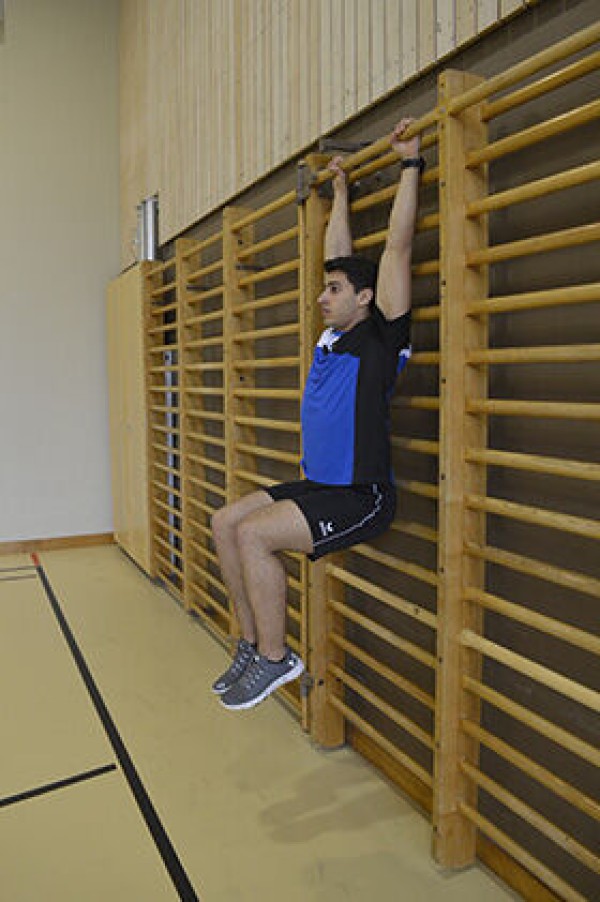
Hanging on the wall bars (back facing the wall bars), body stretched out, legs bent (knees raised to hip height), hold the position.
Attention:
Back always remains against the wall bars.
Lighten:
Lift the knees less high.
Harden:
Additional weight for the legs; stretch the legs.
1 wall bars
1 horizontal bar
2 weight cuffs/1 (medicine) ball (e.g. football, volleyball, basketball) ► make the exercise more difficult (additional weight)
Extension and flexion of the arms / forearm support ► tricep dip / pillar bridge
Power
Partner work
Exercise both muscle groups ► note the change of position
(= double the time required; for lesson planner see organisation strength: Info button execution)
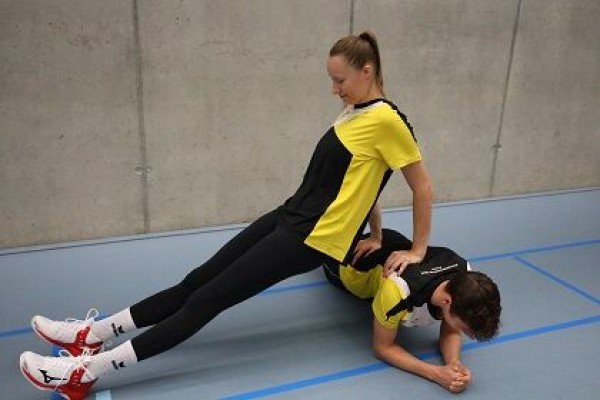
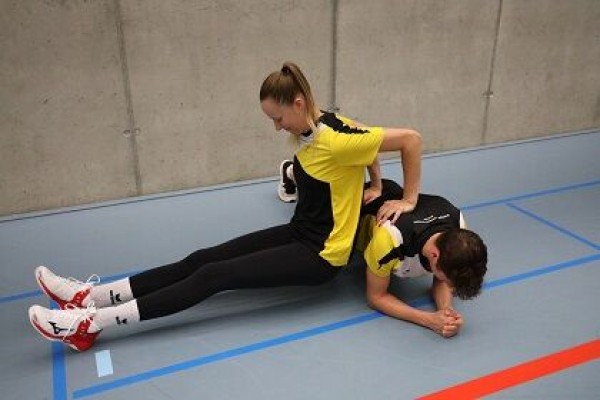
One participant is in the forearm support, the partner supports the upper body from the side (body view of the partners corresponds to the letter "T") with the hands on the partner's back (back facing the partner, arms behind the back, legs stretched). The participant leaning on their partner bends and stretches their arms (lowering and raising the upper body, tricep press).
Attention:
Actively tense the trunk during the forearm support (no sagging). When doing the tricep press, press your elbows together and hold them in place.
Lighten:
Bend your feet closer to your partner/legs, bend your arms less. Forearm support: lower your knees.
Harden:
Additional weight (on the hips); forearm support: Unstable support (for arms and/or legs)
1 weight disc/sandbag ► make the exercise more difficult (additional weight)
1-2 balance cushion/balance board(s) ► make the exercise more difficult (unstable surface)