
Exercises (3302)
Extension und Flexion der Arme im aufrechten Stand ► shoulder press / db shoulder to overhead / db overhead shoulder press
Power
Individual work
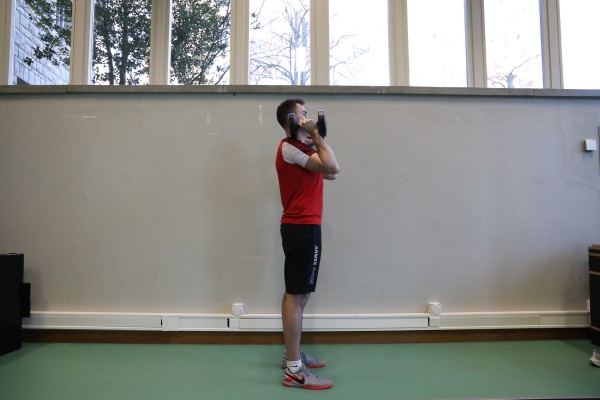
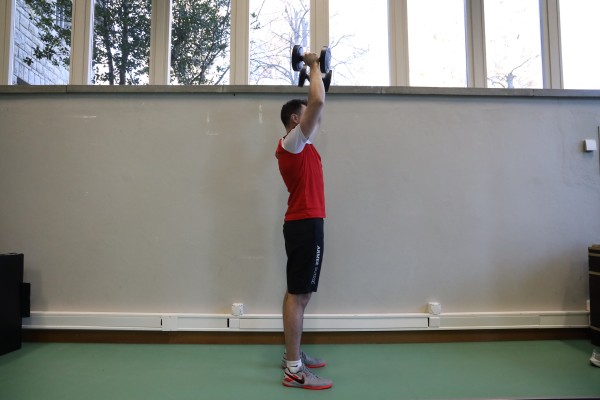
Stand upright with your shoulders shoulder-width apart, hold a dumbbell on each side of your body with your arms bent so that the weights are above your shoulders close to your ears. The elbows point forwards, palms facing each other towards the face (neutral grip). Extend your arms vertically upwards and bend them back to the starting position.
Attention:
Do not fully extend your arms, keep your back straight (possibly back against a wall), actively tense your core.
Lighten:
Less weight.
Harden:
More weight.
Variant I:
Exercise performed in a seated position.
Variant II:
After each exercise, bring your arms/dumbbells together above your head in front of your head (elbows at shoulder height) with your palms facing your face.
2 dumbbells
Extension and flexion of the arms in a lunge (left)
Power
Individual work
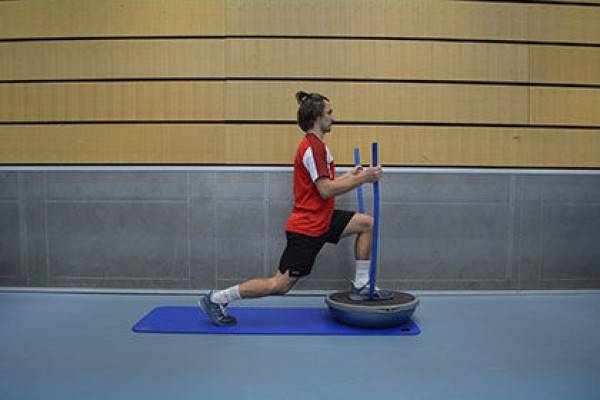
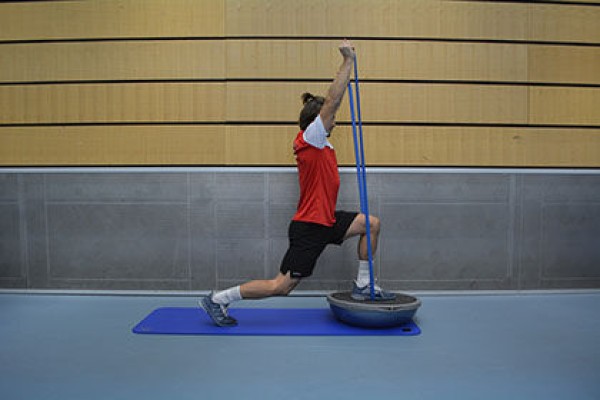
Lunge (left) with the upper body upright, front (left) leg bent (approximately right angle at the knee joint) on a balance cushion/balance ball (possibly placed upside down), back (right) leg bent, with the supporting leg (left) an elasticated rubber band is clamped between the foot and the balance cushion/balance ball. Grasp one side of the elastic band at around stomach height, slowly raise your arms over your head to a high position and back to the starting position.
Attention:
Do not arch your back, tense your core.
Lighten:
Bend your supporting leg less (more upright starting position); choose an elastic band with less resistance; place your supporting leg on the floor.
Harden:
Choose a rubber band with greater resistance.
Variant:
Lift your arms up in front of your body from the holding position (the distance between your arms does not change) or bring your arms together at your sides in an arching movement overhead.
1 balance cushion/balance hemisphere
1 elasticated rubber band
Extension and flexion of the arms in lunge (right)
Power
Individual work
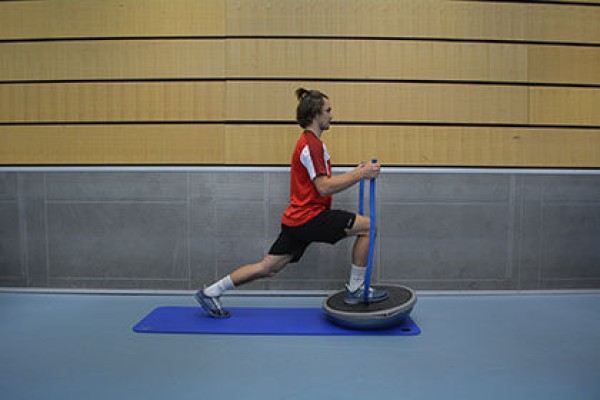
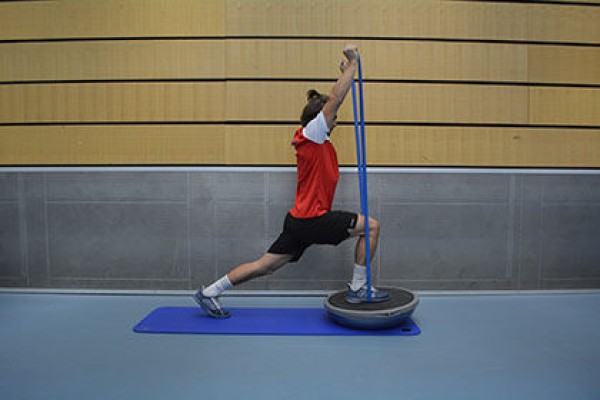
Lunge (right) with upper body upright, front (right) leg bent (approximately right angle in the knee joint) on a balance cushion/balance ball (possibly placed upside down), rear (left) leg bent, with the supporting leg (right) an elasticated rubber leg is clamped between the foot and the balance cushion/balance ball. Grasp one side of the elastic band at around stomach height, slowly raise your arms over your head to a high position and back to the starting position.
Attention:
Do not arch your back, tense your core.
Lighten:
Bend your supporting leg less (more upright starting position); choose an elastic band with less resistance; place your supporting leg on the floor.
Harden:
Choose a rubber band with greater resistance.
Variant:
Lift your arms up in front of your body from the holding position (the distance between your arms does not change) or bring your arms together at your sides in an arching movement overhead.
1 balance cushion/balance hemisphere
1 elasticated rubber band
Extension and flexion of the arms in half kneeling position (left) ► biceps curl
Power
Individual work

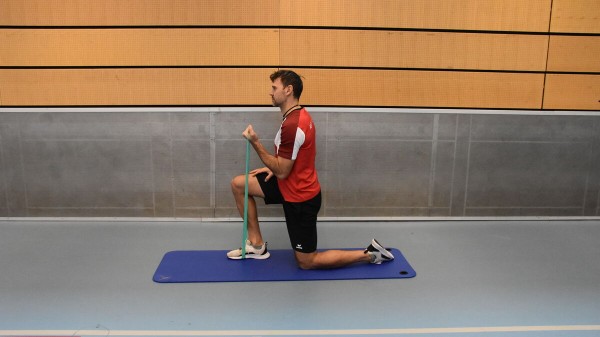
Half kneeling with the upper body tilted slightly forwards, with the (right) foot placed on the floor, an elasticated band is fixed in place. The outstretched left arm on the side of the kneeling (left) leg grasps the elastic band at shin height of the lowered leg. From this position, bend the arm (stretch/tension the elastic band further) by bringing the hand towards the chest. Then stretch your arm back to the starting position.
Attention:
Always keep your back straight (tense your core). The angle of the back and thighs remains unchanged throughout the exercise. Keep your elbows close to your body.
Lighten:
Choose a rubber band with less resistance.
Harden:
Choose a rubber band with more resistance.
Variation:
Grab the band with both arms on the side of the kneeling leg (= organisation 2 exercises).
1 mini-band
Extension and flexion of the arms in half kneeling position (right) ► biceps curl
Power
Individual work


Half kneeling with the upper body tilted slightly forwards, with the (left) foot placed on the floor, an elasticated band is fixed in place. The outstretched right arm on the side of the kneeling (right) leg grasps the elastic band at shin height of the lowered leg. From this position, bend the arm (stretch/tension the elastic band further) by bringing the hand towards the chest. Then stretch your arm back to the starting position.
Attention:
Always keep your back straight (tense your core). The angle of the back and thighs remains unchanged throughout the exercise. Keep your elbows close to your body.
Lighten:
Choose a rubber band with less resistance.
Harden:
Choose a rubber band with more resistance.
Variation:
Grab the band with both arms on the side of the kneeling leg (= organisation 2 exercises).
1 mini-band
Extension and flexion of the arms in half kneeling position ► biceps curl
Power
Individual work

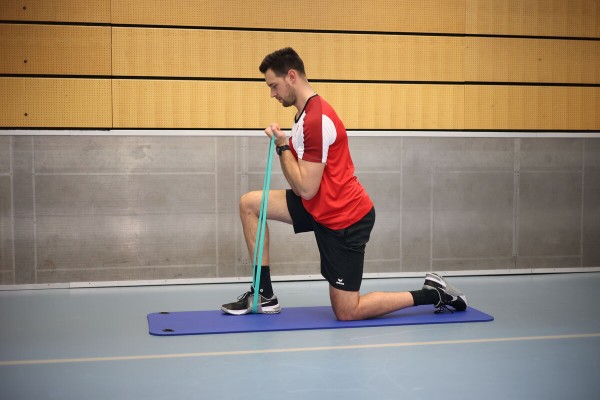
Half kneeling with the upper body leaning slightly forwards, with the (right) foot placed on the floor, an elasticated band is fixed in place. The stretched arms hold the free end of the elastic band on the side of the kneeling leg (left) at shin height of the lowered leg. From this position, bend your arms (stretch/tension the elastic band further) by bringing your hands to your chest. Then stretch your arms back to the starting position. Of course, the exercise can also be performed with the left leg off the ground and the right leg kneeling (if necessary, change position for several rounds).
Attention:
Always make sure your back is straight (keep your core tensed). The angle of the back and thighs remains unchanged throughout the exercise. Keep your elbows close to your body.
Lighten:
Choose a rubber band with less resistance.
Harden:
Choose a rubber band with more resistance.
Variation:
Grab the band with one arm (side of the kneeling leg - change the position of the half-kneeling position to train the other side = organisation 2 exercises).
1 mini-band
Extension and flexion of the arms in half kneeling position ► face pull
Power
Individual work
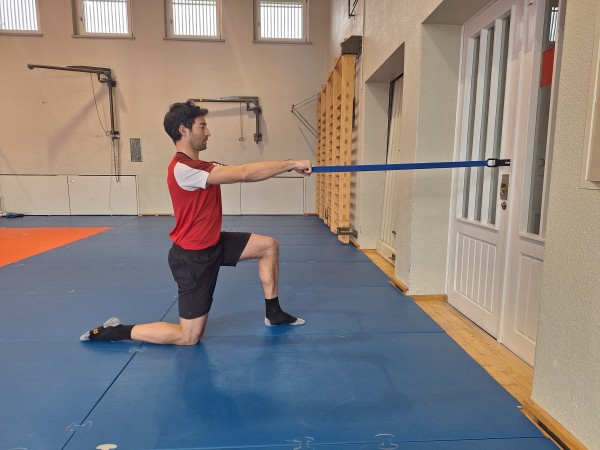

Stand in a half kneeling position with your upper body straight (facing the wall), your outstretched arms holding the elastic band fixed at chest height (arms horizontal to the floor). From this position, bend your arms (stretch/tension the elastic band further) by bringing your hands to your chest (keep your elbows at shoulder height). Then stretch your arms back to the starting position. If necessary, change the position (knee down) for several rounds.
Attention:
Always make sure your back is straight (keep your torso tensed). The movement takes place in the arms, keep the upper body stable.
Lighten:
Choose a rubber band with less resistance.
Harden:
Choose a rubber band with greater resistance.
Variant:
Grab the band with one arm (side of the kneeling leg - change half-kneeling position to train the other side = organisation 2 exercises).
1 elasticated rubber band
1 fastening elasticated rubber band
Extension and flexion of the arms in half kneeling position ► pallof press
Power
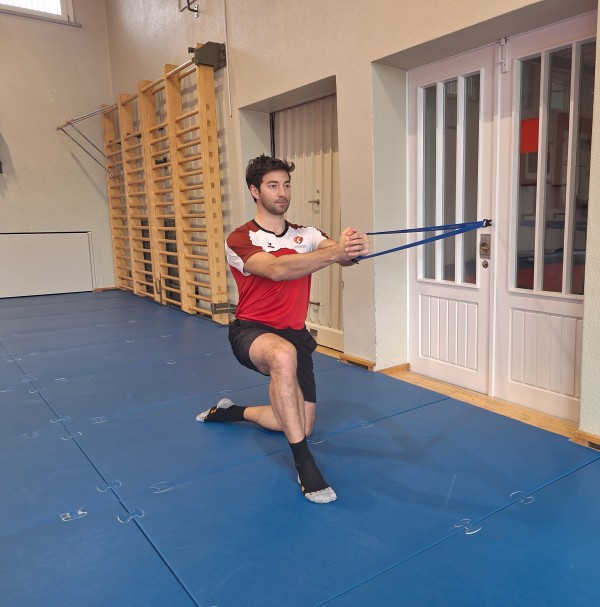
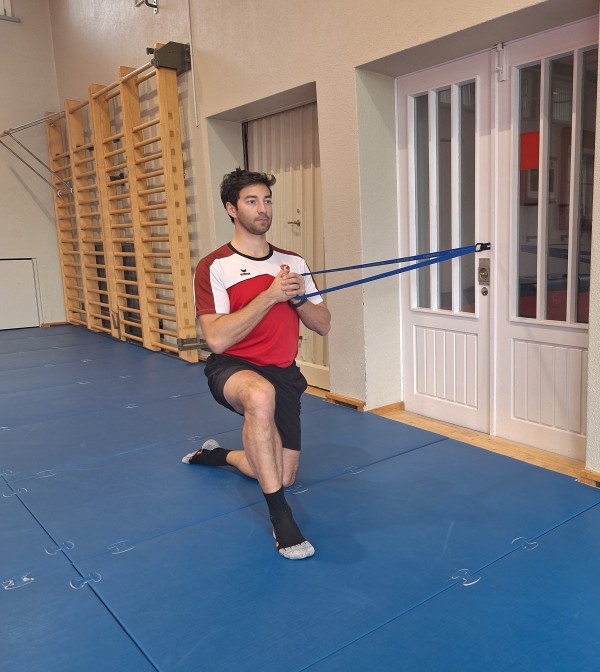
Assume a half-kneeling position. The upper body is upright and aligned straight. The knee facing the anchor point is on the floor; the outer leg is positioned at the front at a 90° angle. The arms, extended horizontally, hold the resistance band – secured at chest height – in the centre of the chest. From this position, bend the arms and bring the hands towards the chest (keeping the elbows close to the body). Then extend the arms back to the starting position, resist the rotational force for 2 seconds and bring the hands back to the chest in a controlled manner. Change position/side when performing several repetitions.
Attention:
Always ensure your back is straight (engage your core).
The movement comes from the arms, whilst the upper body and pelvis remain stable.
The front knee remains steady and does not give way to the side under the pull.
Lighten:
Move closer to the attachment point to reduce the strap tension.
Choose a lighter strap.
Harden:
Choose a resistance band with greater resistance.
Perform the exercise whilst standing.
Whilst standing: Place your back foot and front foot exactly on an imaginary line (tandem stance, narrow base of support).
Move further away from the anchor point.
1 elastic band
1 fastening for elastic band/wall bars
1 elastic band with less resistance ► to make the exercise easier
1 elastic band with more resistance ► makes the exercise more difficult
Extension and flexion of the arms on a slope (pull-up) (left) ► pull up
Power
Individual work
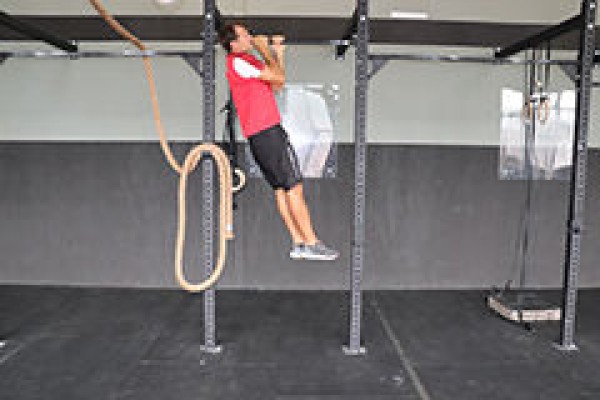
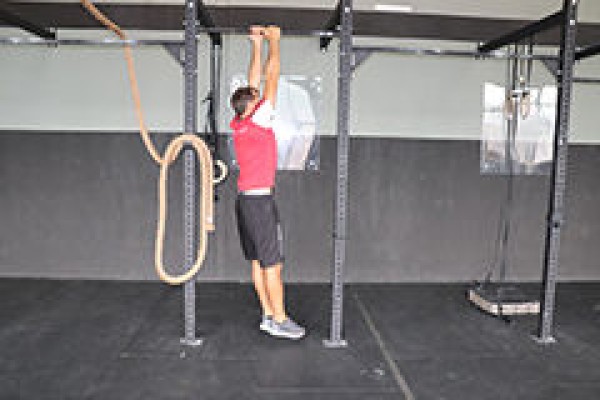
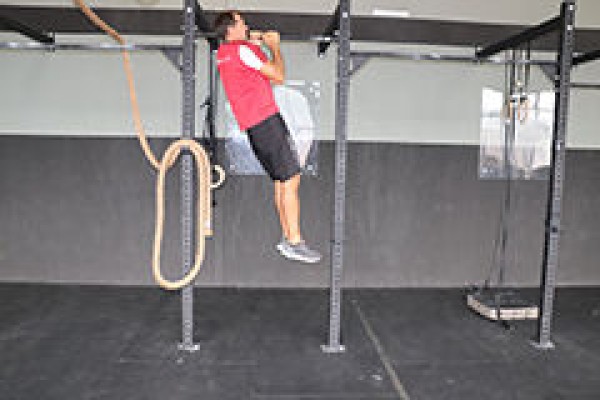
On a slope with arms stretched out on the horizontal bar, with the body/gaze aligned along the bar and the hands placed close together above the head, the bar is gripped with an overhand grip, the left hand is positioned in front of the right hand (back of the hand points to the respective side away from the bar). Bend your arms to pull your upper body up as vertically as possible until your head is above the bar (shoulder at the bar). Then, by stretching your arms, bring your body back to a full body extension in a controlled manner (arms stretched out above your head). After each execution, change the side on which the head is moved past the bar.
Attention:
Work without momentum if possible and pull the body vertically upwards.
Lighten:
Attach an elastic band to the horizontal bar to place one or both feet in its loop.
Harden:
Additional weight.
1 horizontal bar
1 elasticated rubber band ► make the exercise easier (support)
2 weight cuffs/1 weight waistcoat ► make the exercise more difficult (additional weight)
Extension and flexion of the arms on a slope (pull-up) (right) ► pull up
Power
Individual work
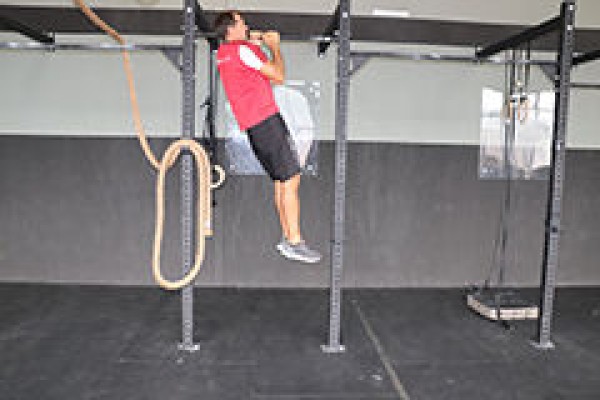
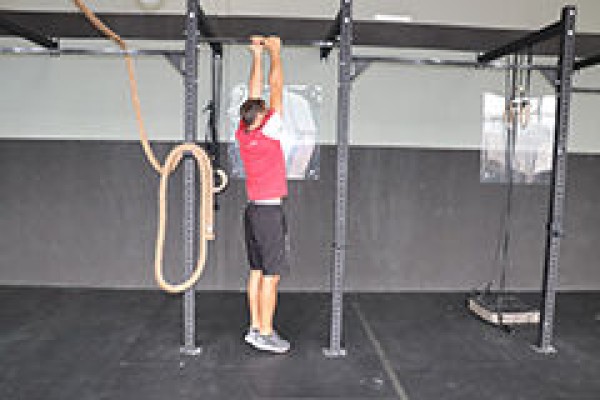
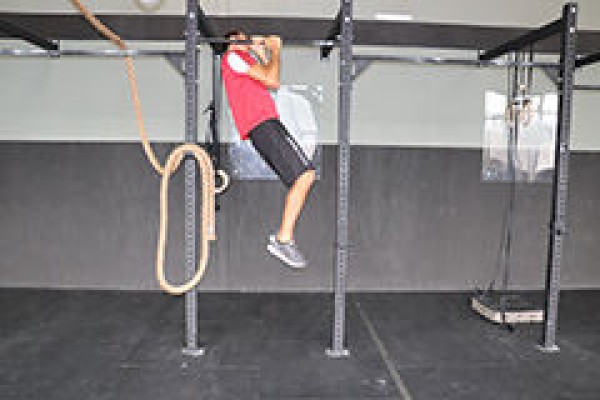
On a slope with arms stretched out on the horizontal bar, with the body/gaze aligned along the bar and the hands placed close together above the head, the bar is gripped with an overhand grip, the right hand is positioned in front of the left hand (back of the hand points to the respective side away from the bar). Bend your arms to pull your upper body up as vertically as possible until your head is above the horizontal bar (shoulder at the bar). Then, by stretching your arms, bring your body back to a full body extension in a controlled manner (arms stretched out above your head). After each execution, change the side on which the head is moved past the bar.
Attention:
Work without momentum if possible and pull the body vertically upwards.
Lighten:
Attach an elastic band to the horizontal bar to place one or both feet in its loop.
Harden:
Additional weight.
1 horizontal bar
1 elasticated rubber band ► make the exercise easier (support)
2 weight cuffs/1 weight waistcoat ► make the exercise more difficult (additional weight)
Extension and flexion of the arms on a slope (pull-up) ► banded pull up
Power
Individual work
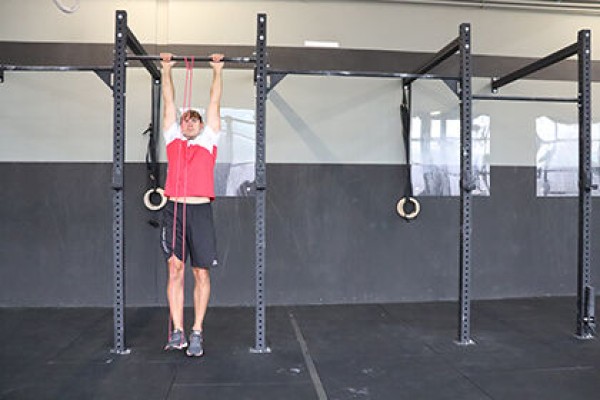
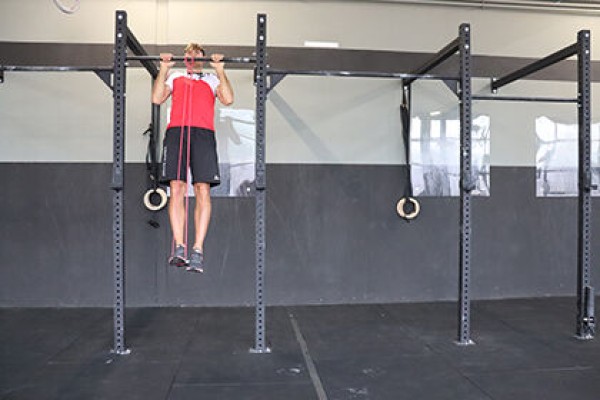

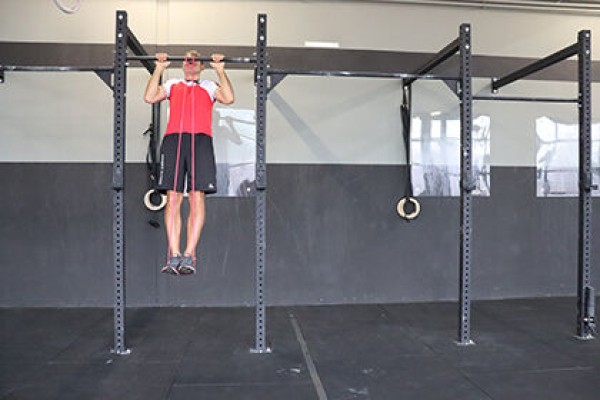
While hanging from the horizontal bar (upper grip, back of hands pointing backwards), place one or both feet in the loop of an elasticated rubber band attached to the horizontal bar with your legs straight. Bend your arms to pull your upper body as vertically (strictly) upwards as possible until your chin rises above the horizontal bar (arms almost at shoulder height). Then, by stretching your arms, bring your body back up the slope in a controlled manner (arms extended above your head).
Attention:
Work without momentum if possible and pull your body up vertically.
Lighten:
Attach a stiffer elastic band to the bar.
Harden:
Exercise without the support of an elastic band; additional weight.
Variation:
Grab the bar with an underhand grip (palm facing your face).
1 horizontal bar
1 elasticated rubber band (medium/soft)
1 elasticated rubber band (hard) ► make the exercise easier (additional support)
2 weight cuffs/1 weight waistcoat ► make the exercise more difficult (additional weight)
Extension and flexion of the arms on a slope (pull-up) ► pull up
Power
Individual work
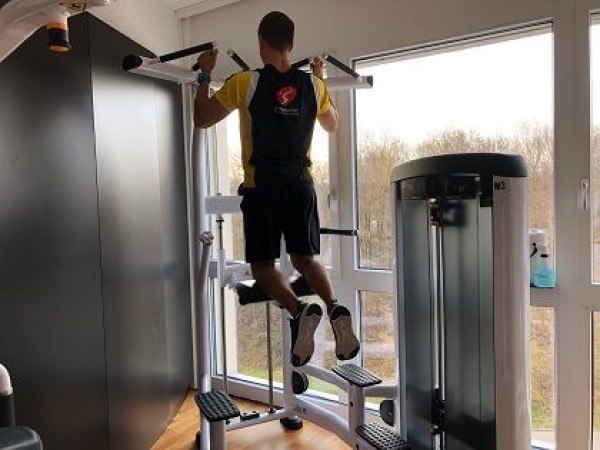
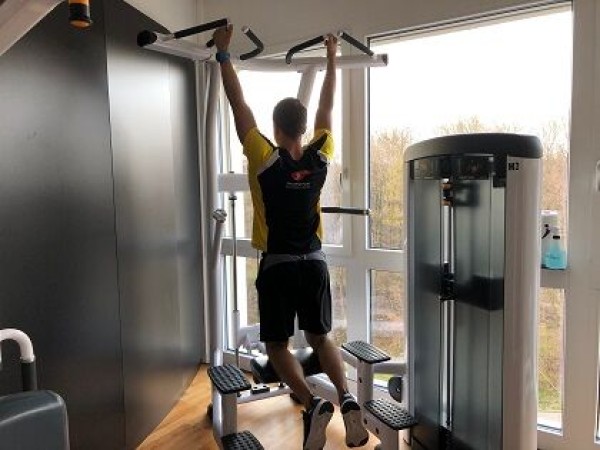
Hold on to the handles in a hanging position and choose an overhand, underhand or neutral grip depending on your options. Bend your arms to pull yourself up as far as possible (hands at shoulder height), then lower your body to the starting position in a controlled manner.
Starting position:
- Select the type of grip (if possible)
- Hanging position with stretched posture
- Tense the core muscles
Finishing position:
- Elbows pulled back and down
- Chin at handle height
Attention:
When raising the upper body, work primarily from the back.
Extension and flexion of the arms on a slope (pull-up) ► strict pull up
Power
Individual work

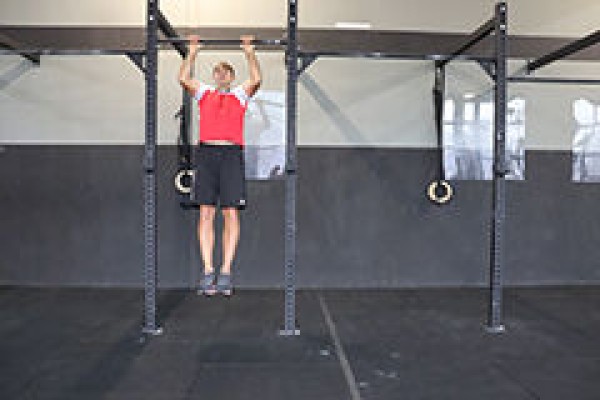

On the slope at the horizontal bar (upper grip, back of hands pointing backwards), bend your arms to pull your upper body up as vertically as possible (strict) until your chin is above the horizontal bar (arms almost at shoulder height). Then, by stretching your arms, bring your body back up the slope in a controlled manner (arms extended above your head).
Attention:
Work without momentum if possible and pull your body vertically upwards.
Lighten:
Attach an elasticated band to the bar to place one or both feet in its loop.
Harden:
Additional weight.
Variant:
Grab the bar with an underhand grip (palm facing your face).
1 horizontal bar
1 elasticated rubber band ► make the exercise easier (support)
2 weight cuffs/1 weight waistcoat ► make the exercise more difficult (additional weight)
Extension and flexion of the arms on a slope (pull-up) and alternating push-ups ► pull up & burpee
Power
Individual work
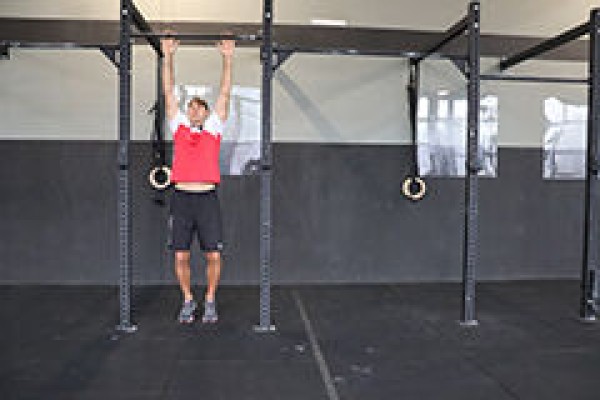

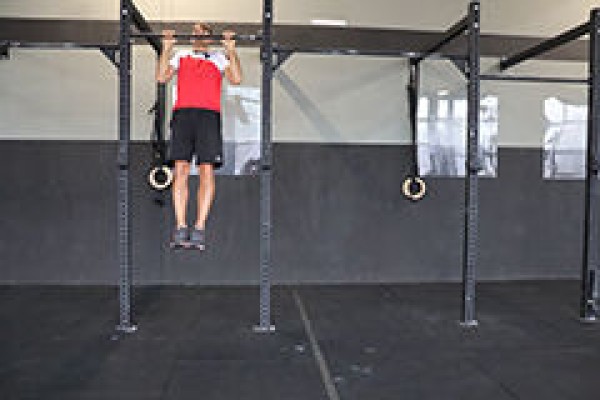

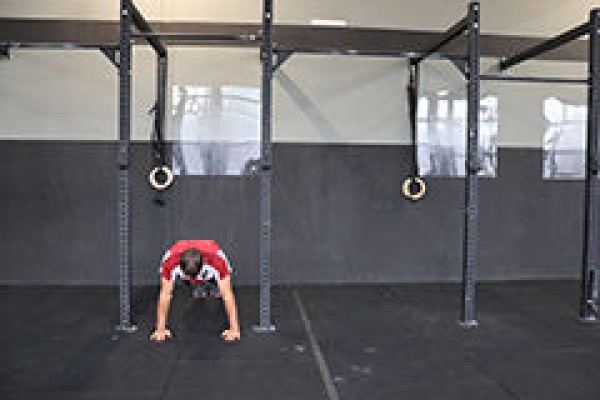
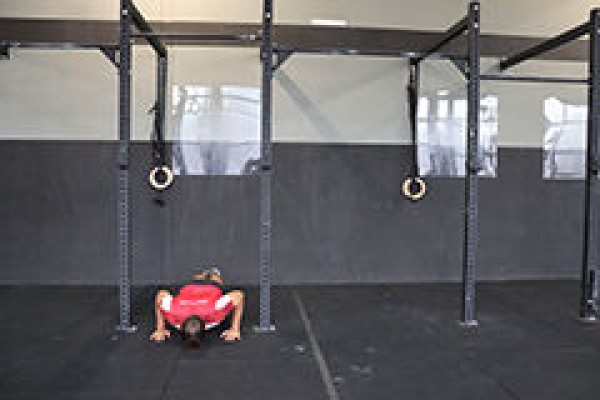
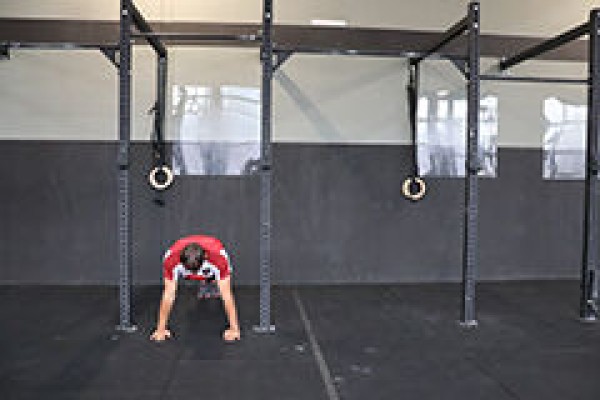
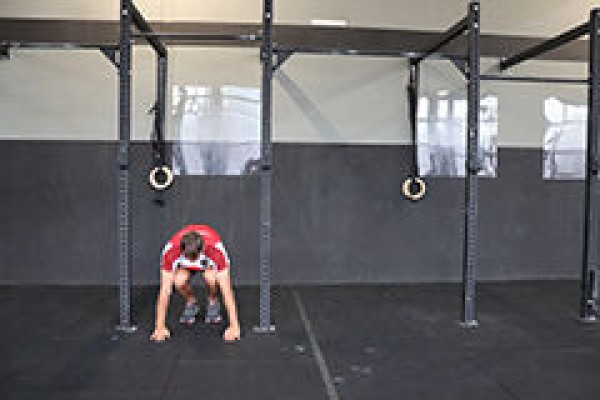
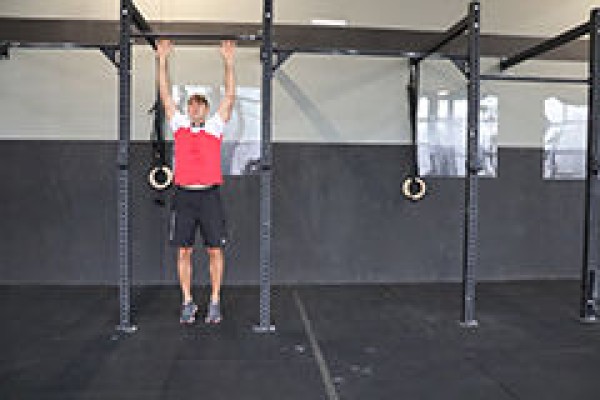
Bend your arms in the slope at the horizontal bar (upper grip), raise your upper body until your chin is level with the horizontal bar, straighten your arms and bring your body back to the starting position. Release your hands to move from the hang to the standing position. From the standing position, bend your legs and place your hands next to your feet to squat down. Support yourself with your hands and jump backwards with both legs to get into a push-up position. Bend your arms to fully lower your upper body (prone position). From the prone position, push back into the push-up position with both arms and jump back into the squat position. From the squat position, perform a small (stretch) jump so that you can grab the horizontal bar again.
Attention:
Do not arch your back in the push-up position (body tension).
Lighten:
Lower intensity between individual exercises; pull your upper body up less during pull-ups or use an elasticated band for support.
Harden:
Additional weight.
1 horizontal bar
1 elasticated rubber band ► make the exercise easier (support)
2-4 weight cuffs/1 weight waistcoat ► make the exercise more difficult (additional weight)
Extension and flexion of the arms while kneeling (chest press) ► chest press
Power
Individual work
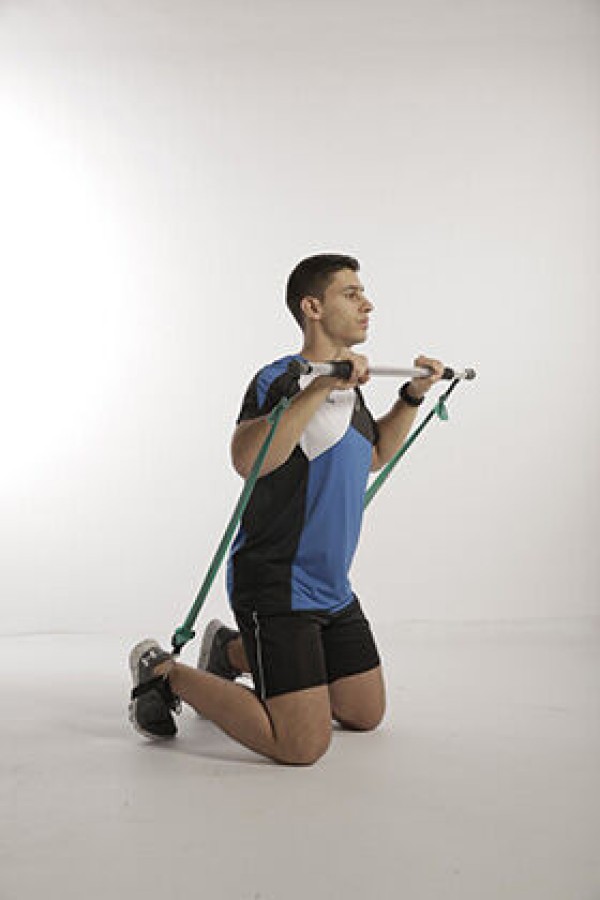
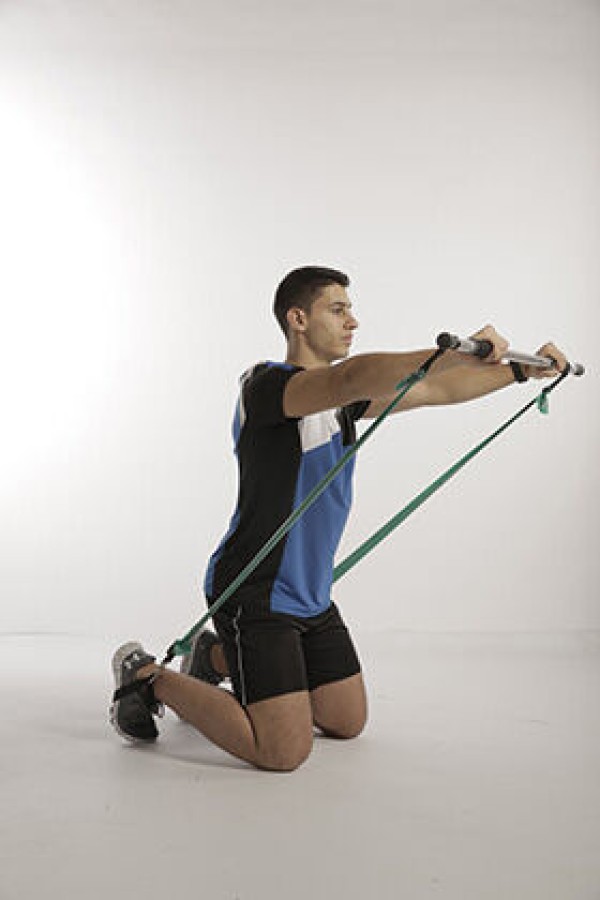
Stand on your knees with your feet in the loops, hold the gymnastics pole at chest height with your arms bent (the backs of your hands pointing towards your chest), push the gymnastics pole forwards (arms outstretched) and return to the starting position.
Attention:
The movement only takes place in the arms (upper body remains stable and upright, no leaning forwards or backwards).
Lighten:
Select less strong elastic bands; roll up the elastic bands less.
Harden:
Select stronger elastic bands; roll up the elastic bands more.
1 gymnastic bar with elasticated straps
Extension and flexion of the arms while kneeling ► pull up
Power
Individual work
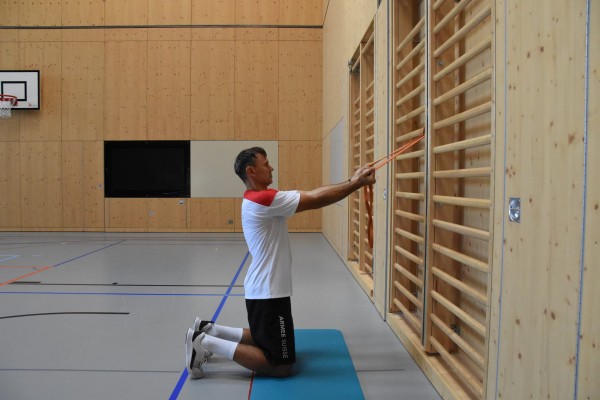
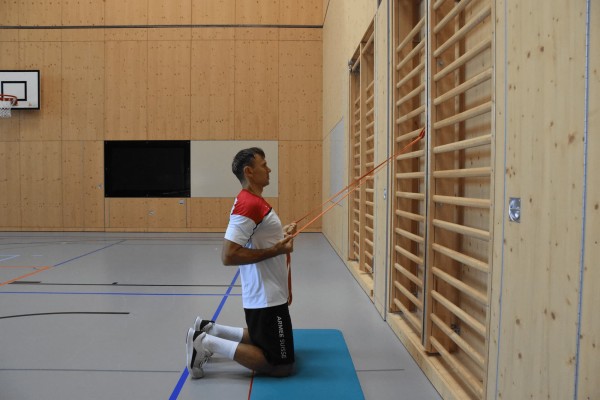
While standing, fasten the elastic band at head height. The exercise takes place in a kneeling position (chest facing the wall). Grasp the elastic band with both hands in an underhand grip with outstretched arms (arms pointing diagonally upwards in front). Bend your arms so that your hands are brought towards your chest (arms close to your body - elbows pointing diagonally backwards). Stretch your arms back to the starting position.
Attention:
Movement only takes place in the arms and shoulders, upper body remains stable (tense torso). Keep your back straight.
Lighten:
Choose a rubber band with lower resistance.
Harden:
Choose a rubber band with greater resistance.
1 elasticated rubber band
1 fastening elasticated rubber band
Extension and flexion of the arms while leaning backwards on the heels ► inverted row
Power
Individual work
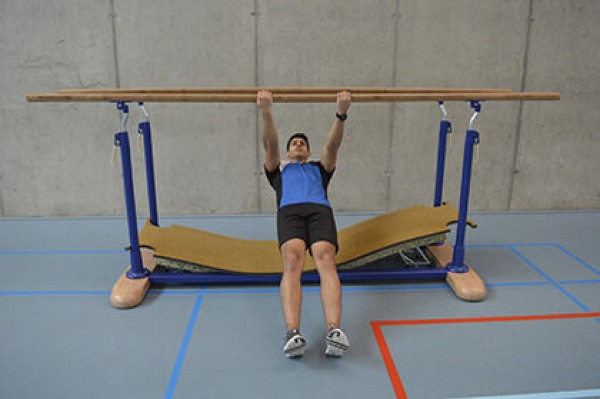

Hold on to the (rear) bars with your hands in a heel position and in a strong back position, back of your hands pointing towards your feet (underhand grip), bend and stretch your arms (raise and lower your upper body, bring your chest towards the bars).
Attention:
Foot, knees, pelvis and shoulders practically form a line (body tensed, pelvis pushed up), arms not fully extended.
Lighten:
A more upright position (higher bars).
Harden:
Position more hanging (lower bars); additional weight.
Variant:
Back of hands point towards the face (overhand grip), actively contract shoulders in the end position.
1 parallel bar
1 weight waistcoat ► to make the exercise more difficult (additional weight)
Extension and flexion of the arms while leaning backwards on the heels ► inverted row
Power
Individual work
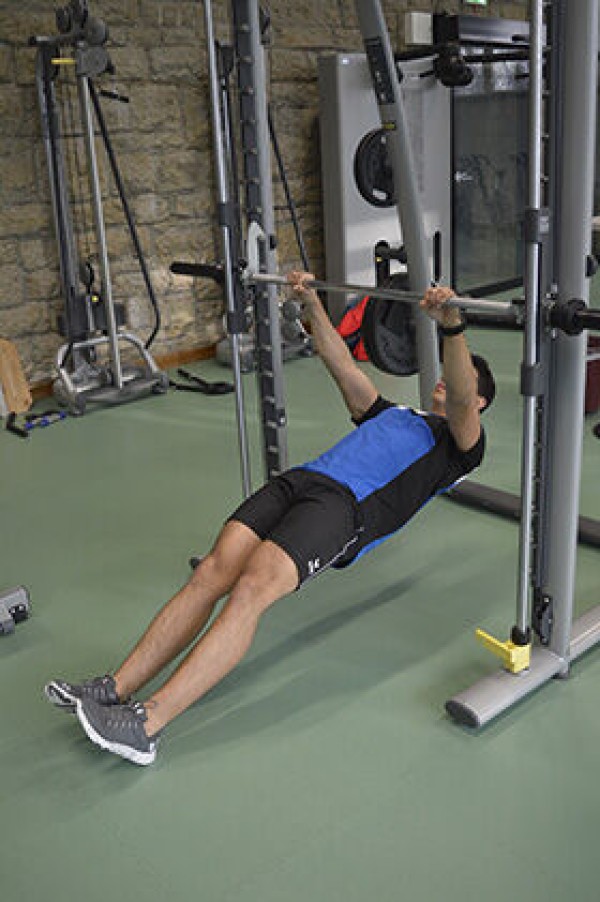
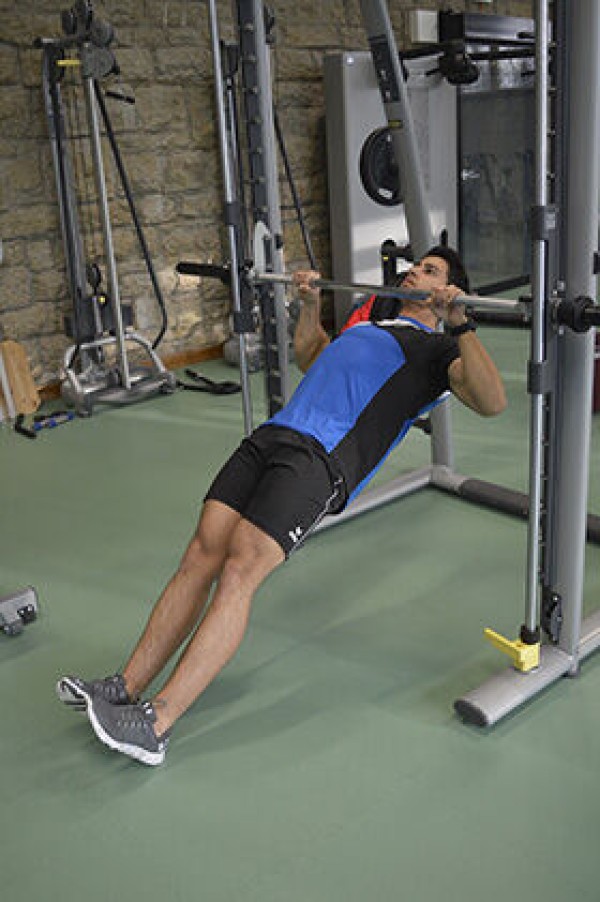
A barbell is fixed approx. 1-1.5 metres above the floor. Lie on your back and hang from the barbell with your arms stretched out and only your heels touching the floor (hanging heel stand). Bend your arms and pull your body upwards in a controlled manner until your chest touches the bar, actively contracting your shoulders. Hold this position briefly and lower your upper body in a controlled manner.
Starting position:
- Heel stand in a hanging position (looking upwards), (almost) straight arms grip the pole
- Grip slightly more than shoulder-width apart
- The body forms a straight line from head to toe (push the pelvis up)
Finishing position:
- Arms bent, chest touching the bar, actively pulling the shoulders together
Variant:
The bar can be held with an overhand grip (back of the hand pointing towards the face) or an underhand grip (back of the hand pointing towards the feet).
Lighten:
Bend your legs; fix the bar in a higher position (body is more upright).
Harden:
The further away your feet (in heel position) are from the bar, the more difficult the exercise is; fix the bar at a low height (body hangs at a lower angle to the floor).
1 barbell
1 barbell rack
Extension and flexion of the arms while leaning backwards on the heels ► inverted row
Power
Individual work

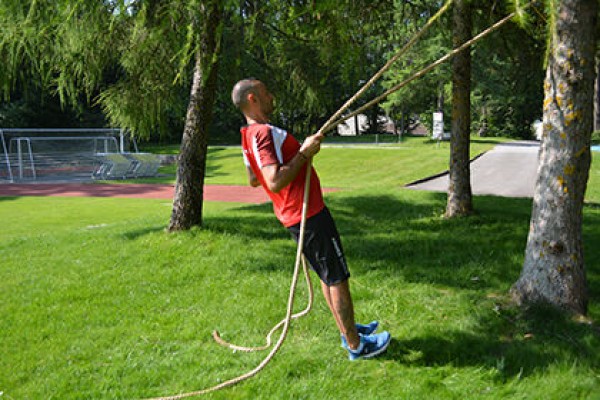
Hold on to the aid (rope/rope) with both hands shoulder-width apart, back of hands pointing to the side, arms bent and stretched (upper body raised and lowered, chest towards the aid).
Attention:
Foot, knees, pelvis and shoulders practically form a line (body tensed, pelvis pushed up), arms not fully extended.
Lighten:
A more upright position; bend arms less.
Harden:
Position more hanging than starting position; additional weight.
1 tree (or similar for threading the aid)
1 rope/rope
1 weight vest/fighting rucksack ► to make the exercise more difficult (additional weight)
Extension and flexion of the arms while leaning backwards on the heels ► inverted row
Power
Individual work
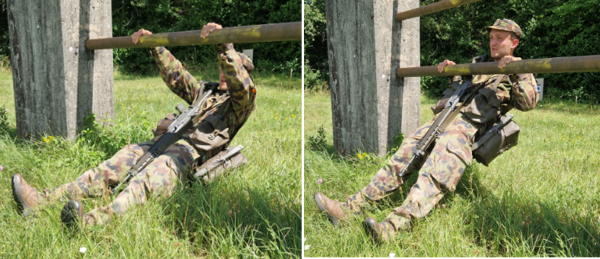
Hold on to the pole with your arms outstretched (palms facing your face), legs on your heels and far enough away to assume a hanging/lying position. Move your upper body upwards and then back down again by bending and stretching your arms (maintain body tension by tensing your core muscles).
Lighten:
Select a higher position for the bar
Harden:
With a backpack
Participant: tenue CNK 420
Additional material: 1 sling trainer/bar/table
Extension and flexion of the arms while leaning backwards on the heels ► inverted row
Power
Individual work
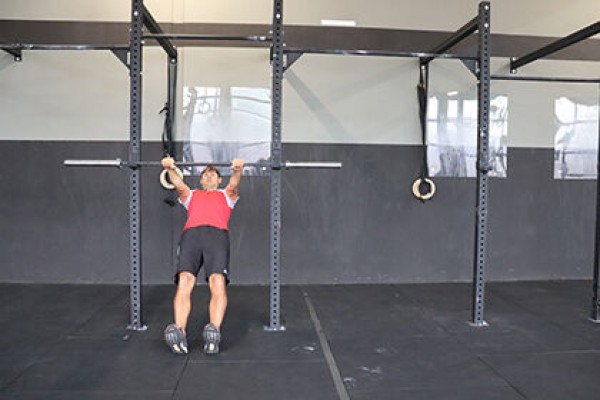
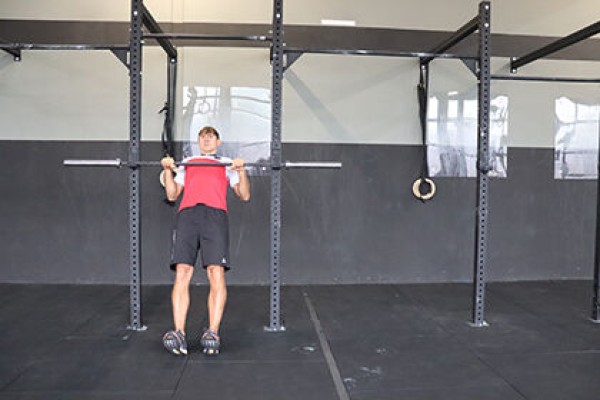
The horizontal bar is set approximately between stomach and chest height. Hold on to the horizontal bar with your hands in a heel position, grasp the bar with an overhand grip (back of hand facing your face), keep your arms slightly wider than shoulder width, bend your arms to pull your body/chest towards the bar, then stretch your arms back to the starting position (raise and lower your upper body).
Attention:
Foot, knees, pelvis and shoulders practically form a line (body tensed, pelvis pushed up), arms not fully extended; actively pull your shoulders together as you raise your body.
Lighten:
Set upright position (higher stretch position); bend legs.
Harden:
Position more hanging (lower stretch position); additional weight.
Variant:
Grab horizontal bar with an underhand grip (palms facing feet).
1 horizontal bar
Extension and flexion of the arms while leaning backwards on the heels ► inverted row
Power
Individual work
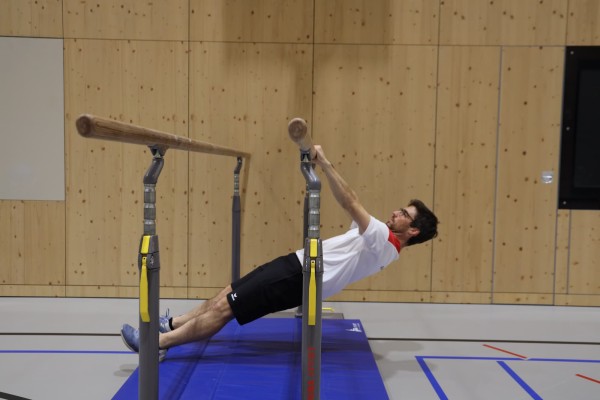
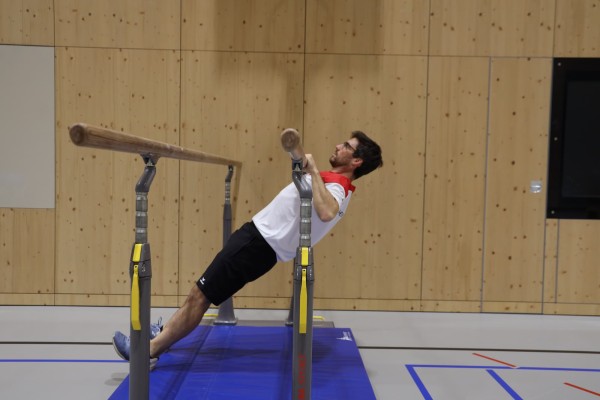
Stand upright in front of the parallel bars and grasp the (rear) rungs at about chest height (with the backs of your hands facing your head – overhand grip). Place your feet hip-width apart and lean your body backwards until your arms are fully extended (support your body on your heels). Keep your body as straight as possible from head to heel. Tense your core and buttocks. From the extended position, pull your body towards the bar in a controlled manner. As you do so, pull your shoulder blades back and down and bring your elbows close to your body. Move your chest towards the bar. Then lower your body slowly without losing your core tension.
Attention:
The feet, knees, pelvis and shoulders should form a straight line (body taut, pelvis pushed up), with the arms always kept taut. Actively draw the shoulder blades together in the final position.
Lighten:
Sit more upright – lean your body less far back (higher crossbar); bend your knees more; reduce the range of movement (bend your arms less).
Harden:
Adopt a more hanging position – lean your body further back (lower crossbar, feet on the long bench); add extra weight.
1 parallel bar
1 weight waistcoat ► to make the exercise more difficult (additional weight)
1 flat bench ► to make the exercise more difficult (position)
Extension and flexion of the arms while leaning backwards on the heels ► inverted row
Power
Individual work
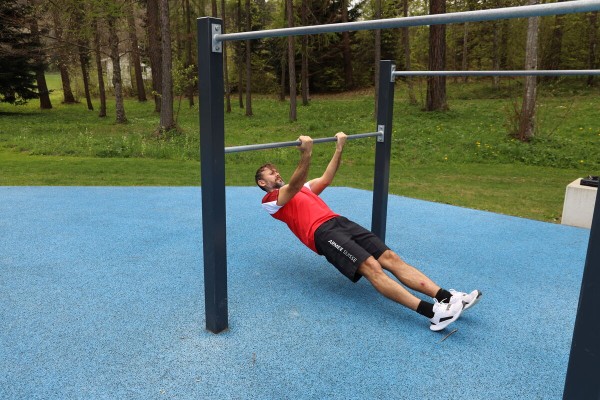
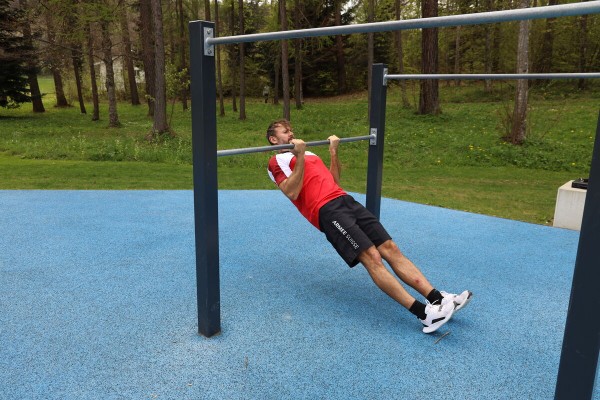
The horizontal bar is set approximately between stomach and chest height. Hold on to the horizontal bar with your hands in heel position, grasp the bar with an underhand grip (back of hands pointing towards your feet), keep your arms slightly wider than shoulder width, bend your arms to pull your body/chest towards the bar, then stretch your arms back to the starting position (raise and lower your upper body).
Attention:
Foot, knees, pelvis and shoulders practically form a line (body tensed, pelvis pushed up), arms not fully extended.
Lighten:
Set upright position (higher stretching position); bend legs.
Harden:
Hang more (lower stretching position); add weight.
Variant:
Grab the horizontal bar with an overhand grip (palms facing your face). Actively pull your shoulders together as you raise your body
1 horizontal bar
Extension and flexion of the arms while leaning backwards on the heels ► inverted row
Power
Individual work
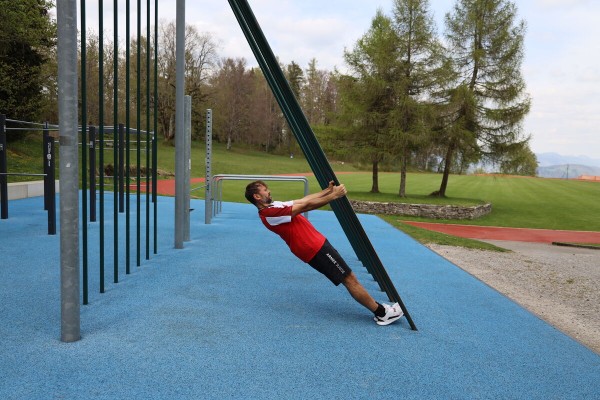
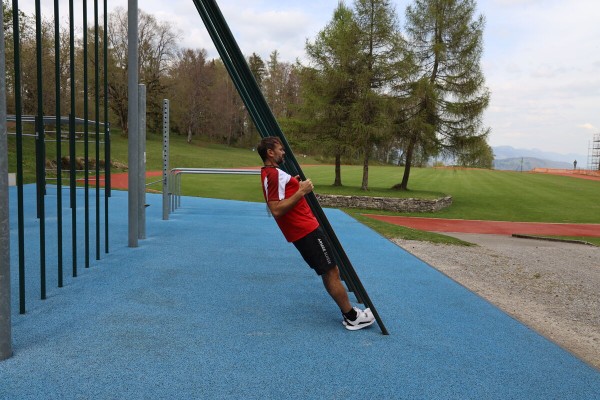
Hold on to the (inclined) climbing pole with both hands in a heel stand and in a strong back position, back of hands pointing to the side, bend and stretch arms (raise and lower upper body, bring chest to the aid).
Attention:
Foot, knees, pelvis and shoulders practically form a line (body tensed, pelvis pushed up), arms not fully extended.
Lighten:
A more upright position (feet flat on the floor); bend arms less.
Harden:
Position more hanging than starting position; additional weight.
2 climbing poles (inclined)
1 weight vest/fighting rucksack ► to make the exercise more difficult (additional weight)
Extension and flexion of the arms while leaning backwards on the heels ► inverted row
Power
Individual work
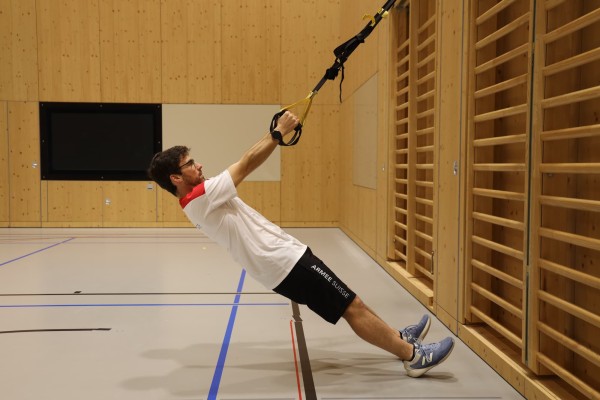
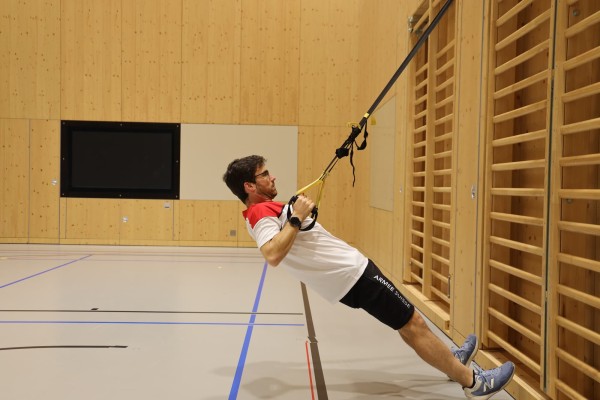
Stand with your heels under the sling trainer and grip the handles with both hands. Keep your legs straight. Your body and legs should form as straight a line as possible, keeping your hips raised. From this position, bend your arms and pull your upper body towards the handles in a controlled manner. As you do so, pull your shoulder blades back and down. Then slowly straighten your arms again and lower your body in a controlled manner.
Attention:
Keep your body as straight as possible throughout the entire movement; do not let your hips drop or push them upwards; actively stabilise your shoulder blades; do not raise your shoulders; move your elbows backwards in a controlled manner; Keep your head in line with your spine; do not use momentum or hip movement; distribute the load as evenly as possible between both arms; guide the sling trainer in a controlled and even manner.
Lighten:
Sit more upright – lean your body less far back (shorter swings); bend your knees more; reduce the range of motion (bend your arms less).
Harden:
Adopt a more hanging position – lean your body further back (longer sling); add extra weight.
1 sling trainer
1 weight (weighted vest, weight plate) ► making the exercise harder